Garage Door Cable Replacement in St. Cloud, FL: 7 Warning Signs to Act On
A garage door cable is a thin steel cable with a heavy job, and garage door cable replacement is the repair that follows when that cable starts to fail. Lift cables connect the springs to the bottom corners of
the door, and they carry the door’s weight in balance as it opens and closes. When one cable frays, rusts, stretches, or slips off its drum, the door no longer lifts evenly, and the remaining cable, the springs, and the opener all take extra strain. That is why a cable problem is not a cosmetic fault to watch for months, because a cable that looks worn today can snap without warning tomorrow.
This guide explains garage door cable replacement in plain terms for St. Cloud homes, starting with what cables do and the seven warning signs to check from a safe distance. It covers why cables fail faster in Florida humidity, what to do if a cable snaps, what a technician’s visit usually includes, and national cost context for planning. Each section starts with the problem and ends with the solution, so you can act on one section alone, and you will know exactly what to tell a technician when you call. Calling connects you with an independent local technician who confirms the final price before any work begins.
Featured snippet answer (see count): Garage door cable replacement is needed when a lift cable frays, rusts, kinks, goes slack, or slips off its drum, because the cable carries the door’s weight under spring tension. Stop using the door, unplug the opener, and call a technician, who usually replaces both cables together and checks the drums and bottom brackets. National context is roughly $150 to $300, with the final price confirmed before work.
Garage Door Cable Replacement: What Lift Cables Do
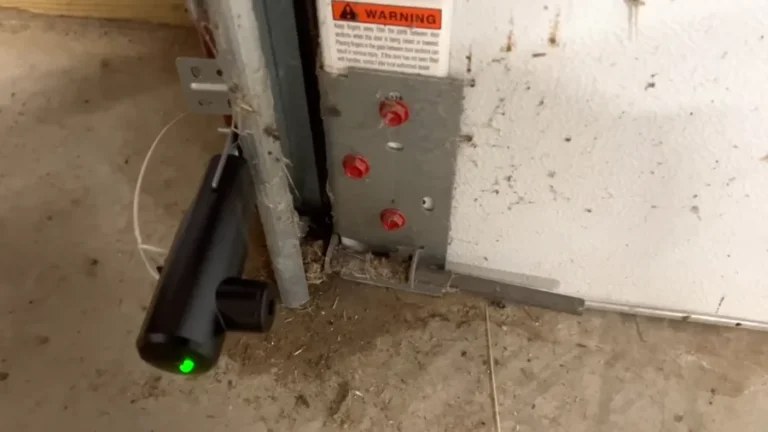
Most sectional garage doors use two lift cables, one on each side, and each cable runs from a bottom bracket at a lower corner of the door up to a drum or pulley near the top of the opening.
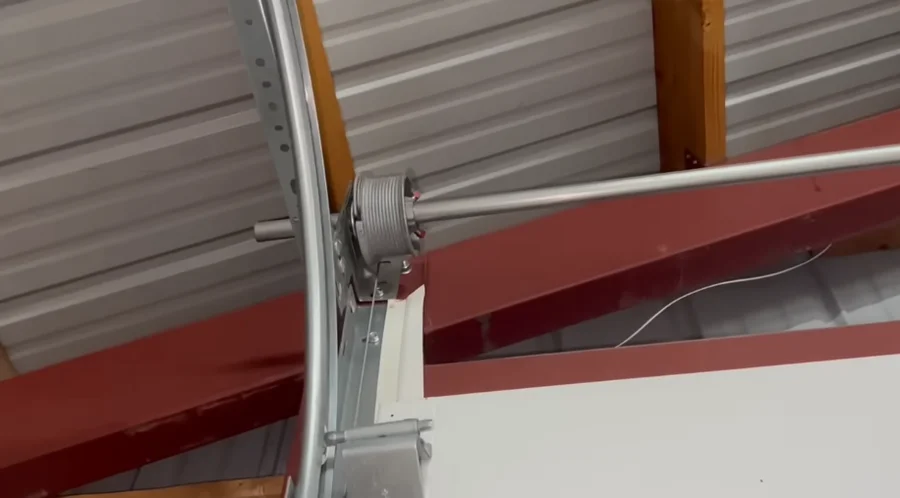
On a torsion-spring door, the cable winds onto a grooved drum at the end of the spring shaft above the door, and as the spring unwinds, the drum winds the cable up and lifts the door. On an extension-spring door, the cable runs over pulleys and works with the stretched spring beside the track to lift the door in the same balanced way. The springs store the lifting force, but the cables deliver it to the door, so a good spring cannot lift a door whose cable has failed.
That balance is the whole point of garage door cable replacement as a paired job, because the two cables share the load equally on every cycle. If one cable stretches, frays, or slips, the door tilts, one side lags, and the opener pulls against a door that is no longer level. A tilted door can bind in its tracks, wear rollers unevenly, and bend a panel or pull hardware loose, which turns a cable job into a track or panel job as well. Do not confuse lift cables with the separate safety cable that runs through an extension spring, because that safety cable lifts nothing and only stops a broken spring from flying across the garage.
Garage Door Cable Replacement: The Seven Warning Signs
The first problem with cables is that they fail quietly, and the second problem is that the signs are easy to miss from a distance. A monthly look from a safe distance, with the door closed and the opener unplugged if you are unsure, catches most cable trouble before it snaps. Look at both bottom corners first, because the lowest foot of cable near the floor takes the most water, dirt, and wear, and then look up at the drums and along the cable run for slack or uneven winding. If any sign below is present, stop running the door normally and call, because each extra cycle loads the damaged cable further.
Garage door cable replacement becomes urgent, not routine, when a cable has already snapped or slipped off its drum, and that case is covered in the snapped-cable section below. For the earlier signs, the rule is simple: one clear sign is enough to book a visit, and two signs together mean the door should stay closed until it is checked. The checker table after this list turns what you see into the next step, and it is the tool competitors scatter across several pages instead of putting in one place. Never touch a cable that is under tension, and never loosen a bottom bracket bolt, because those parts hold the full spring load even when the door looks still.
- Fraying or whisker strands: individual steel strands separating, unraveling, or poking out along the cable, often near the bottom bracket or drum.
- Rust or discoloration: orange or brown corrosion on the cable surface, which weakens strands from the outside in and hides deeper damage.
- Kinks or flattened spots: a bend, kink, or flat section where the cable went slack and then caught, creating a weak point that will fail there.
- Slack or a loose loop: a cable that hangs loose beside the track, or a loop at the bottom bracket, when the door is closed and cables should be taut.
- Cable off the drum: a cable that has jumped its drum grooves, overlaps itself on the drum, or hangs tangled near the top of the opening.
- A crooked or jerky door: one side lifting faster, one side sitting lower, or the door shuddering, sticking, or stopping partway through travel.
- A loud snap or sudden drop: a sharp popping sound followed by a door that drops on one side, hangs unevenly, or will not lift at all.
| Garage Door Cable Replacement Checker: What You See | What It Usually Means | Do This Next |
|---|---|---|
| Whisker strands or unraveling near a bracket | Cable strands already breaking | Book garage door cable replacement soon, limit door use |
| Rust or discoloration near the floor | Corrosion weakening the cable | Book a visit, keep the door closed if rust is heavy |
| Kink or flattened spot in the cable | Weak point from a slack event | Stop forcing the door, call a technician |
| Slack loop or cable hanging loose | Cable off tension or off the drum | Unplug the opener, keep the door closed, call |
| Cable overlapping or off its drum grooves | Drum, bearing, or slack problem | Do not try to re-spool it, call a technician |
| Door crooked, jerky, or stopping partway | Uneven cable load or binding track | Stop using the door, call for an inspection |
| Loud snap, then one side drops | Cable snapped or spring failed | Keep everyone clear, unplug the opener, call |
Garage Door Cable Replacement in St. Cloud: Why Cables Fail Here
St. Cloud weather gives cables a harder life than a dry climate does, and humidity is the main reason garage door cable replacement comes up sooner here. The bottom of each cable sits close to a garage floor that sees rain, wash water, and damp air, and Florida humidity keeps that steel damp long after a storm has passed. Rust starts at the bottom corners and works into the braided strands, so a cable can lose strength before it looks badly damaged from a few feet away. That is also why the site’s rust guide matters alongside this one, because the same damp conditions that rust a panel attack the cable at its lowest, wettest point.
Storm season adds a second cause of garage door cable replacement in St. Cloud, because a door that sticks or hangs up while closing can create a slack event.
When the door binds in its track, the springs keep unwinding while the door stays put, the cables go loose, and a loose cable can jump off its drum. When the door finally drops or is forced, the cable snaps or kinks at the point where it caught, and the next failure is already set up. Daily use adds the third cause, because every open and close bends, winds, and loads the same strands, and worn drums, wobbling bearings, or a cable rubbing against a track edge saw through strands faster. Fixing a binding track early therefore protects the cables, just as replacing worn cables early protects the track.
Garage Door Cable Replacement: What to Do If a Cable Snaps
A snapped cable is a stop-now problem, and the first step is to protect people rather than to save the door.
Stop using the opener at once and unplug it, because driving a door with one cable twists it in the tracks and can bend the top section where the opener arm attaches. Keep everyone out from under the door, and do not pull the emergency release or try to lift the door by hand, because one corner is now unsupported and the door can rack sideways or drop. If the door is closed, leave it closed and lock the entry door into the house, and if the door is partly open and leaning, keep the area clear until a technician arrives.
Garage door cable replacement after a snap is a technician visit, not a homeowner repair, and that boundary is absolute for safety. On a torsion-spring door, the cables cannot come off until the spring tension is fully released by a trained technician with the right tools, and the new cables must be set to equal tension before the springs are wound back up. On an extension-spring door, the spring, pulley, and cable stay loaded whenever the door is down, and a slip during handling can turn hardware into a projectile. A technician’s visit therefore covers the whole system, not just the broken cable, and the next section explains what that visit usually includes in general terms.
Garage Door Cable Replacement: What a Technician Visit Usually Includes
A technician visit for garage door cable replacement starts with securing the door so it cannot move, then checking why the cable failed before fitting anything new. The drums, shaft bearings, bottom brackets, rollers, and tracks are inspected, because a cable that rubbed, kinked, or jumped its drum usually has a cause that a new cable alone will not fix.
Both lift cables are then fitted as a matched pair of the correct length and diameter, seated properly in the drum grooves, and set to equal tension so the door hangs level. Balance, travel limits, force settings, and auto-reverse are checked at the end, because a door that looks repaired but runs out of balance will wear out its next part sooner.
That full check is the real value of garage door cable replacement done properly, and it is why a cable job takes longer than swapping a loose wire.
A good technician will also say plainly when a drum, bracket, or spring needs attention at the same visit, and when a door that came off its track needs track work as well, so the price you are quoted covers the whole scope. Ask for that scope in writing, with parts, labour, and what was inspected, and confirm the final price before work begins, because a cable quote that ignores a worn drum can grow halfway through the job. If the springs are near the end of their life, doing springs and cables in one visit is often cheaper than two separate calls, since the springs are already unloaded for the cable work.
Garage Door Cable Replacement Costs in Context
National figures are context only, never a St. Cloud quote, and your final price is confirmed by the independent local technician before any work begins. Competitor guides and national cost guides agree on the broad shape of garage door cable replacement pricing, even when their exact ranges differ by region and door type. Replacing both lift cables on a standard one-car or two-car door is commonly put around $150 to $300, with some national guides putting the range at $175 to $350 when drums, resetting, and inspection are included. Extra parts, a door off its track, a heavy or oversized door, and after-hours service all push the total higher, and those extras are listed in the table below.
| Garage Door Cable Replacement Job | National Cost Context | Notes |
|---|---|---|
| Replace both lift cables, standard door | Roughly $150 to $300 | Matched pair, drums reset, safety inspection often included |
| Cables plus new drums or bottom brackets | Adds parts, usually replaced in pairs | Worn drums are a common cause of repeat fraying |
| Cables replaced during a spring replacement | Often a modest add-on | Springs already unloaded, so labour overlaps |
| Door off track because a cable failed | More labour | Track, roller, or panel damage may need work too |
| Heavy wood or oversized door | Higher than standard | Thicker cable and more labour for a heavier door |
| After-hours, weekend, or holiday service | Higher than a weekday visit | Emergency timing, not a different repair |
Two rules help turn those garage door cable replacement ranges into a decision, and both appear across competitor guides in different forms. The first is the pair rule: always replace both cables together, because both have done the same cycles in the same damp conditions, and a new cable paired with an old one can leave the door slightly crooked as the new cable settles. The second is the cause rule: never pay for cables alone when a worn drum, bent bracket, or binding track caused the failure, because the new cable will fray in the same place. Ask for both rules to be followed in writing, with the cause named, so the repair lasts rather than repeats.
Garage Door Cable Replacement: Making New Cables Last Longer
New cables last longest when the conditions that killed the old ones are fixed, and most of that work is simple housekeeping.
Keep the threshold dry by fixing grading or drainage that lets water pool under the door, and renew a cracked or flattened bottom seal, because standing water at the threshold attacks the lowest foot of cable first. In St. Cloud, that means watching the floor after heavy rain and during hurricane season, not just in winter, and keeping the garage floor clear of damp debris piled against the bottom corners. A yearly inspection that checks drums, bearings, alignment, and cable condition catches fraying while it is still a planned visit, not an emergency.
Garage door cable replacement is also less likely to repeat when a binding door is fixed promptly, because binding is what creates slack events that jump cables off drums.
If the door sticks, jerks, or scrapes on the way down, book a visit before the cable pays for that binding, and keep the track area clear of bins, tools, and toys that can block travel. Ask about corrosion-resistant cable if your home is near open water or sees frequent flooding at the threshold, and keep a dated photo of the new cables after fitting, so the next monthly check has a clean comparison. Small habits like these do not replace inspection, but they stretch the years between cable jobs in a humid climate.
Garage Door Cable Replacement: What to Tell a Technician When You Call
Use these short lines, filling in the brackets, for a garage door cable replacement problem:
- “My garage door cable replacement problem is in St. Cloud.”
- “The cable on the [left / right] side is frayed / rusted / kinked / slack / off the drum / snapped.”
- “The door sits crooked / jerks / stops partway / will not lift since the problem started.”
- “The door is closed / partly open and leaning, and the opener is unplugged.”
- “The door is a [single / double] door, and it uses torsion / extension springs, if known.”
- “I have photos of both bottom corners and the drums, taken from a safe distance.”
- “Can you confirm the price for garage door cable replacement before work begins, and replace both cables as a pair?”
Add your neighbourhood — Downtown St. Cloud, Stevens Plantation, Canoe Creek, Harmony, Narcoossee Road, Kissimmee, Lake Nona, Poinciana, or Holopaw — so the visit can be planned, and say at once if the door is crooked, off track, or has a loose cable, because that changes the visit from a planned quote to an urgent inspection. Do not guess at a cable size if you are unsure, because a photo of the bottom bracket and drum area is more useful than a confident but wrong measurement, and never loosen a bracket to get a better photo.
Conclusion
Garage door cable replacement in St. Cloud comes down to three checks, done in order, and they give you the answer in most cases. Look at both bottom corners once a month for fraying, rust, kinks, and slack, because the lowest foot of cable fails first in Florida humidity. Treat one clear sign as enough to book a visit, and treat a snapped, slack, or off-drum cable as a stop-now problem, with the opener unplugged and the door left closed. And always replace both cables as a pair, with the drums and bottom brackets inspected and the cause named, because a cable job that ignores its cause will repeat.
A cable that is fraying today is a cable that will snap later, so garage door cable replacement is a planned repair when it is caught early and an emergency when it is not. Catch it early, and the job is usually a matched pair of cables, a drum check, and a level door that runs smoothly again. Leave it, and the same fault can bend a track, damage a panel, or strain the opener into a second repair. Whatever the answer, get the price confirmed before work begins, and keep the door safe in the meantime by not forcing a door that hangs crooked.
Serving all of St. Cloud for garage door cable replacement — Downtown St. Cloud and the Lakefront, Stevens Plantation, Canoe Creek, Harmony, and the Narcoossee Road corridor, ZIPs 34769, 34771, 34772, and 34773, plus nearby Kissimmee, Buenaventura Lakes, Lake Nona, Hunters Creek, Meadow Woods, Southchase, Campbell, Poinciana, and Holopaw.
Related St. Cloud Garage Door Guides
A garage door cable replacement case is often linked to another fault. See also: a garage door off track in St. Cloud, why your garage door is so loud, repair or replace your garage door, Florida humidity and garage door rust, garage door weatherstripping in St. Cloud, hurricane garage door prep in St. Cloud, garage door spring repair cost in St. Cloud, insulated garage doors in St. Cloud, garage door cable replacement in St. Cloud, and garage door lubrication in St. Cloud.
Safety guidance for garage door work is also covered by the U.S. Consumer Product Safety Commission rules for automatic garage door openers and the DASMA garage door systems safety checklist, which both stress that springs, cables, and bottom brackets under tension should be handled only by a trained technician.
Frequently Asked Questions About Garage Door Cable Replacement
How do I know if my garage door cable needs replacing?
A garage door cable needs replacing when strands fray or stick out, rust or discoloration appears near the floor, a kink or flat spot forms, the cable goes slack, or it slips off its drum. A door that hangs crooked, jerks, or stops partway is another strong sign. One clear sign is enough to book a technician visit, and a snapped cable means stop using the door at once.
Can I replace a garage door cable myself?
No, garage door cable replacement is not a safe homeowner job, because lift cables work under full spring tension on most doors. On a torsion-spring door, the springs must be fully released by a trained technician before cables can come off, and new cables must be tensioned equally. On an extension-spring door, the springs and pulleys stay loaded when the door is down, so a slip can cause serious injury.
Should both garage door cables be replaced at the same time?
Yes, both cables should always be replaced together as a matched pair. Both cables have done the same number of cycles in the same damp conditions, so if one has frayed or snapped, the other has usually worn nearly as much. Matching new cables also stretch and seat evenly, which keeps the door level and helps it close square against the floor.
How much does garage door cable replacement cost in national terms?
National context for garage door cable replacement, not a St. Cloud quote, puts replacing both lift cables on a standard door around $150 to $300, with some guides putting it at $175 to $350 including drums and inspection. Heavy doors, extra parts, a door off its track, and after-hours service cost more. Your final price is always confirmed by the independent local technician before work begins.
Can I keep using my garage door with one broken cable?
No, do not keep using a door with one broken cable. With one cable gone, one side of the door is unsupported, so lifting it by hand or with the opener can twist it in the tracks, bend the top section, or let it fall. Unplug the opener, keep the door closed if it is, keep everyone clear of the opening, and call for garage door cable replacement.
Why does a garage door cable keep coming off the drum?
A cable usually comes off its drum because it went slack, and slack happens when the door binds or hangs up while closing and the springs keep unwinding, when a spring breaks on a two-spring door, or when drums or bearings are worn or misaligned. Re-spooling the cable alone fixes only the symptom, so a technician must also find and fix the cause during garage door cable replacement.
How long do garage door cables last?
There is no fixed lifespan for garage door cables, because rust, rubbing, worn drums, and slack events affect them differently. Many cables last as long as the springs in dry conditions, but Florida humidity, water pooling at the threshold, and a binding track can wear a cable out in a few years. A monthly visual check is the best way to catch wear early.
What should I photograph before calling about a cable problem?
Photograph both bottom corners of the door, the cable run beside each track, and the drum area if you can do so safely from a distance, without touching any cable or loosening any bracket. Note which side is affected, whether the cable is frayed, rusted, slack, or snapped, and whether the door still runs normally. Those photos help a technician judge urgency, parts, and price before the visit.
Is garage door cable replacement covered by a home warranty?
It depends on your own warranty or policy, because some home warranties cover garage door hardware while others exclude cables, springs, and wear items. Read your own documents before paying out of pocket, and do not assume a small cable job is worth a claim if the excess is close to the repair cost. A technician’s written scope, with photos, helps any garage door cable replacement claim either way.
How can I make new garage door cables last longer in Florida?
Keep the threshold dry, renew a cracked bottom seal, and fix grading that lets water pool under the door, because damp at the bottom corners rusts cables fastest. Fix a binding door promptly so cables never go slack and jump their drums, and schedule a yearly inspection of drums, bearings, and alignment. Those habits, plus a monthly visual check, stretch the years between garage door cable replacement jobs.