
Why Is My Garage Door So Loud? St. Cloud Noise Fixes
A noisy garage door is often a lubrication problem, not a replacement problem. Squeaking means dry hinges and rollers; grinding means track or roller wear; rattling means loose hardware; a loud bang means a broken spring (stop and call a pro). Here’s how to decode every sound and quiet your door — with Florida-specific intervals, because heat bakes lubricant off faster here.
Noisy Garage Door? Decode Every Sound
| Sound | Likely cause | Fix |
|---|---|---|
| Squeaking / screeching | Dry hinges, rollers, or bearings | Silicone lubricant on moving metal parts |
| Grinding / scraping | Worn rollers or track debris/misalignment | Clean tracks; replace rollers if worn |
| Rattling / vibrating | Loose nuts, bolts, and brackets (the most common cause) | Tighten all hardware with a socket wrench |
| Popping / creaking | Torsion spring coils binding; section joints dry | Lubricate spring coils and hinges |
| Loud bang, then noise stops | Broken spring | Stop using the door — call for spring repair |
| Rumbling from the opener | Vibration transferring through ceiling mount | Vibration isolator pads; check mounting |
The Simple Fix: Lubricate It Right
Many noisy garage doors come down to one thing: the door hasn’t been lubricated in years, and Florida heat dried out whatever was left. Here’s the right way:
What to use
🧴 Silicone spray lubricant
The correct choice for hinges, rollers, and springs. Doesn’t attract dust.
⚙️ White lithium grease
Best for the opener’s chain/screw drive and metal-on-metal contact points.
🚫 NOT WD-40
A solvent, not a lubricant. It strips grease and attracts grit — the door gets louder within weeks.
What to lubricate — and what to NEVER touch
- Lubricate: hinges, roller bearings (not nylon wheels themselves), torsion spring coils, bearing plates, and the opener’s chain or screw.
- NEVER lubricate: the tracks (rollers need traction — grease in tracks causes slipping and wear), belt-drive openers (they’re designed to run dry), or the photo-eye sensors.
⚠️ The WD-40 Trap
A common mistake is spraying WD-40 on a noisy garage door. It can be quiet for a week, then louder than ever, because the solvent strips the real lubricant and attracts dust. If you’ve already WD-40’d your door, wipe the parts down and apply proper silicone lubricant. The Door & Access Systems Manufacturers Association offers maintenance guidance worth following.
Tighten Everything (the Free Fix)
A garage door cycles up and down thousands of times, and every cycle vibrates the hardware looser — a top cause of a noisy garage door. Grab a socket wrench and check every nut, bolt, and bracket
— especially the roller brackets and the bolts holding the tracks to the wall. In our experience, loose hardware causes the majority of rattling complaints, and the fix is free.One caution: do NOT touch the red-painted bottom brackets or anything connected to the cables — those are under spring tension and can cause serious injury. Everything else is fair game.
The Best Upgrade: Nylon Rollers
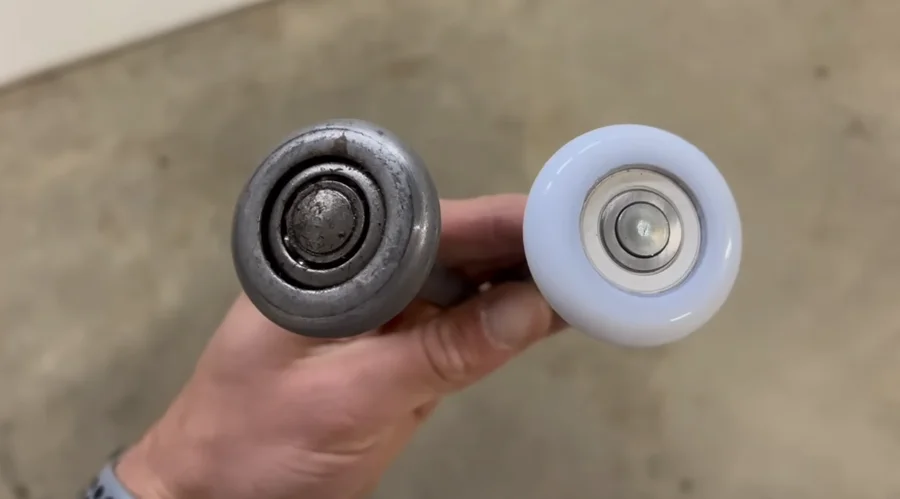
If your door still uses old metal rollers, upgrading to sealed 13-ball nylon rollers is the single best noise upgrade you can buy. Metal rollers clatter down steel tracks; nylon glides. The difference is dramatic — especially for bedrooms above the garage. Ask the technician to price a full set. They usually last longer than the metal rollers they replace.
Bedroom Above the Garage? Kill the Vibration
If the opener’s rumble shakes the room above, the problem is vibration transferring through the ceiling mount. Vibration isolator pads between the opener and the mounting bracket absorb most of it. Also check that the opener is mounted to solid framing — a mount screwed only into drywall amplifies every sound.
How Often to Lubricate in Florida
National advice says twice a year. In St. Cloud, plan on every 3–4 months. Florida heat bakes lubricant off metal faster, humidity washes it out during storm season, and airborne dust turns old lubricant into grinding paste. Tie it to something memorable: lubricate when the clocks change and once mid-summer.
Still Loud After Lubrication?
Call (407) 674-3803 — if lube and tightening didn’t fix it, you’ve likely got worn rollers, a failing bearing, or track damage. We’ll diagnose it and quiet it down, usually in one visit.
Frequently Asked Questions
Can I use WD-40 on my garage door?
No — WD-40 is a solvent, not a lubricant. It strips existing grease and attracts dust, making the door louder within weeks. Use a silicone-based garage door lubricant or white lithium grease instead.
What is the best lubricant for garage doors?
Silicone-based spray lubricant for hinges, rollers, springs, and bearings; white lithium grease for the opener chain or screw drive. Never lubricate the tracks or a belt-drive opener.
Why is my garage door so noisy all of a sudden?
Sudden new noise from a noisy garage door usually means something changed: a roller wore through, hardware worked loose, lubricant baked off in the heat — or a spring broke (a loud bang followed by silence from the door). Sudden + loud = get it checked promptly.
How can I make my garage door opener quieter?
Upgrade to a belt-drive opener if you have a chain drive, add vibration isolator pads at the ceiling mount, and make sure the opener is mounted to solid framing — not just drywall.
Are nylon rollers worth the money?
Yes — they’re the best noise-per-dollar upgrade available. Sealed 13-ball nylon rollers are much quieter than metal rollers and usually last longer. Ask the technician for a price.
Get Your Quiet Door Back
Roller upgrades, tune-ups, and noisy garage door diagnosis across St. Cloud, FL. Call (407) 674-3803 and we’ll connect you with a technician as soon as one is available.