
Florida Humidity Is Killing Your Garage Door: Rust & Maintenance Guide
Garage door rust is inevitable in Florida unless you fight it: humidity and salt air corrode garage door hardware around the clock — even on dry days, because salt is hygroscopic and pulls moisture from the air. In St. Cloud, humidity can make springs, cables, rollers and hinges wear out sooner. HomeAdvisor rates torsion springs at about 8 to 15 years of normal use. The fix isn’t complicated: quarterly lubrication, annual inspections, and servicing twice a year in our climate. Here’s the complete guide.
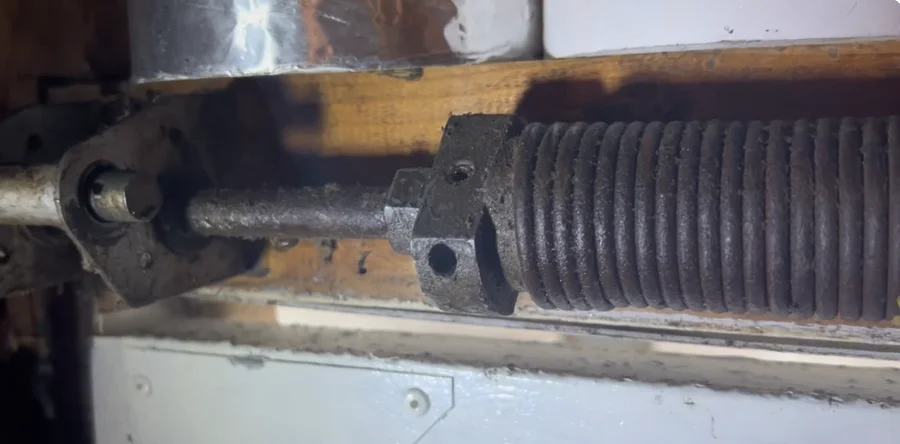
Garage Door Rust: How Florida Destroys Your Door
St. Cloud isn’t beachfront, but you don’t need ocean spray to corrode a garage door. Central Florida delivers the same slow damage through a different recipe:
- Relentless humidity: long stretches of high humidity keep metal surfaces damp. Rust never sleeps here — it just slows down slightly in “winter.”
- Airborne salt: salt particles travel far inland on sea breezes. Salt is hygroscopic — it grabs moisture from humid air and holds it against the metal, corroding 24/7 even when nothing looks wet.
- Afternoon storms: daily downpours in summer drive rain under and around the door, soaking bottom brackets, cables, and seals.
- Heat cycling: Hot days and cooler nights expand and contract metal constantly, cracking protective coatings and opening fresh steel to corrosion.
The Failure Order: What Rust Kills First
Garage door rust doesn’t strike randomly. On Florida doors, parts fail in a documented order — knowing it lets you catch problems early:
💡 The Fingertip Test
Run your finger along cables, tracks, and brackets. Surface discoloration you can’t feel is cosmetic — clean and lubricate it. Pitting or roughness you can feel means the metal is being eaten: that part needs professional evaluation, and often replacement.
Your Quarterly DIY Maintenance Checklist
Every 3–4 months (Florida’s heat demands the shorter interval), work through this list:
- ✅ Lubricate: silicone spray on hinges, roller bearings, spring coils, and bearing plates. White lithium on the opener chain/screw. Never the tracks, never the belt, never WD-40.
- ✅ Tighten hardware: socket-wrench every nut and bolt — roller brackets, track bolts, opener mounts. Skip anything connected to springs or cables.
- ✅ Balance test: disconnect the opener (red cord, door fully closed), lift the door halfway by hand, and let go. A balanced door stays put. If it slams down or shoots up, the springs need professional adjustment.
- ✅ Safety reverse test: place a 2×4 flat on the floor in the door’s path and close it. The door must reverse on contact. If it doesn’t, stop using the door and call a pro.
- ✅ Sensor check: wipe both photo-eye lenses and confirm both LEDs glow solid.
- ✅ Seal inspection: check the bottom rubber seal and side weatherstripping for cracks — failed seals invite storm water and pests.
- ✅ Rust patrol: fingertip-test springs, cables, and bottom brackets. Catch it early and it’s maintenance; catch it late and it’s replacement.
The Twice-Yearly Pro Tune-Up (Yes, Twice)
National guidance says service your door once a year. In humid Florida, twice a year is the real recommendation from working pros. Time it strategically:
- May — pre-hurricane-season tune-up. Springs, cables, bracing, seals, and the emergency release all verified before June. This is the single most valuable service visit of the year in St. Cloud.
- November — post-season recovery. Storm-season vibration loosens hardware; summer humidity accelerates corrosion. Catch it all before the “cooler” months.
What Pros Check That You Can’t
- Spring tension and cycle-life remaining (measured, not guessed)
- Internal cable wear at the drums — invisible without disassembly
- Bearing condition inside sealed rollers
- Track alignment with precision tools
- Opener force settings calibrated to the door’s actual weight
A tune-up isn’t an upsell — it’s the cheapest insurance in home maintenance. The Door & Access Systems Manufacturers Association recommends regular professional inspection of springs, cables, and safety systems. The visit that catches a fraying cable costs a fraction of the emergency call when that cable snaps at 6 AM.
Fighting Rust: What Actually Works
| Method | What it does | Verdict |
|---|---|---|
| Silicone lubricant (quarterly) | Displaces moisture, protects surfaces | ✅ Do this — the foundation |
| White lithium grease on springs | Heavy-duty corrosion barrier on coils | ✅ Excellent for Florida |
| Rust converter + repaint (panels) | Stabilizes surface rust cosmetically | ⚠️ Cosmetic only — won’t save rust-through |
| Galvanized / powder-coated hardware | Corrosion-resistant from the start | ✅ Best for replacements |
| WD-40 as “rust prevention” | Strips protection, attracts grit | ❌ Makes it worse |
When replacing hardware in Florida, ask for galvanized or powder-coated components — they cost slightly more but resist our climate dramatically better than bare steel. And that mysterious opener strain or new grinding noise? Check for rust first. Corrosion is the hidden cause behind a remarkable number of “mystery” garage door problems here.
Get Your Pre-Season Tune-Up in St. Cloud
Call (407) 674-3803 — full 20-point inspection, lubrication, hardware tightening, balance and safety testing. Twice a year keeps garage door rust from eating your door.
Frequently Asked Questions
Why does my garage door rust so fast in Florida?
Constant humidity keeps metal damp for months, and airborne salt — which is hygroscopic — pulls even more moisture onto surfaces and holds it there. That combination is why garage door rust corrodes hardware around the clock, even on dry days.
How often should I service my garage door in Florida?
DIY maintenance (lubrication, tightening, safety tests) every 3–4 months, and professional tune-ups twice a year — ideally May (pre-hurricane-season) and November (post-season). That’s the schedule that keeps garage door rust from winning. Inland national guidance of once a year isn’t enough for our climate.
What does garage door maintenance include?
Lubrication of all moving parts, hardware tightening, spring tension check, balance test, safety-reverse test, sensor cleaning and alignment, seal inspection, and a rust/corrosion survey of springs, cables, rollers, and brackets.
How do I prevent my garage door springs from rusting?
Quarterly application of silicone lubricant or white lithium grease on the coils displaces moisture and slows corrosion dramatically. Keep the garage ventilated, and have springs inspected annually — in Florida, consider high-cycle or coated springs at replacement time.
Is a yearly tune-up worth it or just an upsell?
It’s worth it — and in Florida, twice yearly. A tune-up catches fraying cables, weakening springs, and loosened hardware before they become emergency calls that cost more. It’s the cheapest insurance in home maintenance.
Protect Your Door From Florida, Year-Round
Serving St. Cloud, FL — Downtown, Lakefront, Stevens Plantation, Harmony, Canoe Creek, Kissimmee, and beyond. Call (407) 674-3803 to schedule your tune-up.