Garage Door Battery Backup in St. Cloud, FL: 7 Facts Before the Next Outage
A garage door battery backup is the part of your opener you never think about until the lights go out, and in St. Cloud that moment usually comes during a thunderstorm or a hurricane, when the garage is the way in or out of the house.
A door that will not move when the power is out is more than an inconvenience, because the car may be trapped inside, the groceries may be stuck in the boot, and in a real emergency the garage may be the fastest way out. This guide explains what a garage door battery backup does, how long it really lasts, the beeps and coloured lights that mean it needs replacing, and what to do when your opener has no backup at all.
The problem comes first in every section, because a battery that is dead, missing, or never installed is a problem you only discover when you need it most. The solution follows in each section, so you can check your own opener safely, read its warning lights, and decide whether to replace a battery, add a kit, or replace the opener, with the price confirmed before any work begins. No step in this guide asks you to open the opener housing, touch mains wiring, or work on springs or cables, because those are technician jobs, and a garage door battery backup never makes a damaged door safe to use.
A garage door battery backup is a rechargeable battery inside or beside a compatible opener that runs the motor when household power fails. A fully charged battery usually gives about 24 hours of standby power, or roughly 20 to 50 open and close cycles, depending on the model and the door. It cannot fix a broken spring or a jammed door, and it needs replacing every one to five years.
What Is a Garage Door Battery Backup?
A garage door battery backup is a rechargeable battery that sits inside the opener motor unit or in a small box attached to it, and its only job is to power the opener when the electricity from the house is gone. While the power is on, the battery charges quietly from the mains, so it is always ready, and the moment the power fails, the opener switches to battery power on its own, with no button to press and nothing to plug in. The battery does not power the whole house, and it does not power anything else in the garage, because it is wired only to the opener motor and its controls.
A backup battery is not the same as the small battery in your remote, and confusing the two is the most common mistake homeowners make. The remote battery is a coin cell that sends a radio signal, and it has nothing to do with moving the door, while the backup battery is a much larger 12-volt battery that actually drives the motor, and it is the reason the door can still open and close during an outage.
A keypad has its own small battery too, and it also cannot move the door, so a working keypad and a working remote are no proof at all that your opener has backup power. The only way to know is to look at the opener itself, check the model, and read the manual, because some openers include a garage door battery backup, some accept an add-on kit, and some cannot take one at all.
Why a Garage Door Battery Backup Matters in St. Cloud, FL
Backup power matters in St. Cloud because power outages here are a storm-season fact of life, not a rare event. Summer thunderstorms knock out power for an hour or two, tropical storms can take it out for a day, and a hurricane can leave whole neighbourhoods dark for several days, and in every one of those outages the garage door is the largest moving part of the house and the one most people rely on to get the car in and out.
National outage data shows Florida averages about seven outages a year, adding up to roughly 309 hours without power, and while that is a statewide figure and not a St. Cloud quote, it matches what St. Cloud homeowners already know from experience: the power goes out here, and it goes out in the worst weather.
Backup power turns that outage from a lockout into a minor inconvenience, because the door still opens and closes on its own power. Without one, the only way to move the door is the manual emergency release, and that is a slow, heavy job that many people cannot do alone, especially at night, in the rain, or with a door that is already stiff or binding.
A garage door battery backup also matters for safety, because a door that can still open during an evacuation or a medical emergency is worth more than a door that traps a car behind it. The battery does not make the door storm-proof, and it does not replace the wind and water checks in the hurricane-prep guide, but it does mean the door keeps working when the grid does not.
How Long Does a Garage Door Battery Backup Last?
A fully charged backup battery lasts about 24 hours of standby power on a full charge, or roughly 20 to 50 complete open and close cycles, depending on the opener model, the battery size, and the weight of the door. Manufacturer guidance for common LiftMaster models describes up to 24 hours of operation during an outage, with a fully charged battery supplying power for one to two days of normal use, while Genie guidance describes up to 50 cycles in the first 24 hours.
Those numbers are not a promise for every home, because a heavy double door uses more power than a light single door, a battery that is two years old holds less charge than a new one, and a door that binds or drags will drain the battery faster.
An opener also behaves differently on battery power than it does on mains power, and knowing that in advance stops a lot of worry. Most openers run slower on battery power, the courtesy light on the motor unit usually does not come on, and features like timer-to-close, remote closing through a phone app, and camera functions are often disabled while the battery is in use.
Those are normal design choices to save power, not faults, and they return as soon as household power comes back and the battery recharges. A garage door battery backup needs about 24 hours to fully recharge after an outage, so a second outage the next day may find it only partly charged, which is one more reason to limit battery use to the trips you really need.
Three Batteries in Your Garage Door System
The main-unit battery is only one of three batteries in a typical garage door system, and knowing which one is which saves you replacing the wrong part. The table below is the quickest way to tell them apart, because each battery has a different job, a different life, and a different warning sign when it fails.
| Battery in Your Garage Door System | What It Powers | Typical Life | Warning Sign It Is Failing |
|---|---|---|---|
| Garage door battery backup (main unit) | The opener motor during a power cut | 1 to 5 years, by model | Beeping, red or orange light, slow running on battery |
| Handheld remote battery | The radio signal from the remote | 1 to 2 years | Short range, needs several presses, faint light |
| Wireless keypad battery | The keypad outside the garage | 1 to 2 years | No light when a code is entered, missed presses |
| Wall console clock battery (some models) | The clock and code memory in the wall panel | Several years | Clock resets, settings lost after a power cut |
The main-unit battery is the only one of the three that can move the door without household power, and it is the only one that matters during an outage. Replacing a remote battery will fix a weak remote, and it will do nothing at all for a door that will not move when the power is out, because the remote was never the part that lifts the door. If your door works fine from the wall button but not from the remote, the remote battery is the likely cause, and if your door works fine on mains power but not during an outage, the garage door battery backup is the likely cause, and those two problems should never be confused.
7 Signs Your Garage Door Battery Backup Needs Attention
A backup battery rarely fails without warning, and the opener gives you several signs before it stops working altogether. The seven signs below are the ones homeowners in St. Cloud actually see, and each one points to a different check, so work through them in order and stop at once if the door itself looks damaged, because a battery problem and a mechanical problem can happen at the same time.
The first sign is beeping from the motor unit, and it is the one most people hear first. Many openers beep every couple of seconds while they are running on battery power, and beep about every 30 seconds when the battery is low, so a beep that starts during an outage is normal, while a beep that continues after the power comes back means the battery is not recharging and needs a closer look.
The second sign is the coloured light on the motor unit, because most battery-backup openers use a green, orange, or red light to report battery health, and the meanings are consistent enough to be useful: green usually means charged and ready, orange usually means running on battery or charging, and red usually means the battery has drained and cannot recharge, so it needs replacing. The exact meanings differ by model, so always check your own manual before acting on a light colour.
The third sign is slow or weak operation during an outage, because a healthy garage door battery backup runs the door at a slightly reduced speed, while a dying one runs it very slowly, stops halfway, or cannot lift a heavy door at all. The fourth sign is the door not moving at all during an outage, even though it worked fine on mains power minutes earlier, which usually means the battery is flat, disconnected, or missing, and it is the clearest proof that the backup is not doing its job.
The fifth sign is age, because backup batteries lose capacity with every year, and LiftMaster guidance puts battery life at roughly one to two years under normal use, while other manufacturers allow three to five years, so a battery older than that should be tested even if it has never beeped.
The sixth sign is a battery that never seems to finish charging, because the light stays orange for days after the power returns, or the opener beeps every time the power flickers. The seventh sign is swelling, corrosion, or a smell from the battery compartment, and this one needs a technician at once, because a swollen or leaking battery is not a part to handle yourself. A garage door battery backup that shows any of these signs should be checked before the next storm, not during it, because a battery that fails in fine weather is a repair, while a battery that fails in a hurricane is a lockout.
Can You Add a Garage Door Battery Backup to Any Opener?
A garage door battery backup cannot be added to every opener, and buying a battery before checking compatibility is the most expensive mistake in this guide. Some modern openers are built with a battery already inside, some accept a specific add-on kit made for that exact model, and some, especially older openers, have no battery connection at all, so no battery of any kind will make them run during an outage. A brand name alone is not enough to confirm compatibility, because one brand makes many models, and only some of them support a battery, so the model number on the label is the fact that matters.
An add-on kit is only worth buying when the model is confirmed compatible, the opener is otherwise in good condition, and the door itself runs smoothly on mains power. If the opener is old, noisy, or slow even with full power, or if the door binds, drags, or sits crooked, then a battery will not fix those problems, and the money is better spent on a repair or a replacement opener that includes a battery from the start.
When you compare replacement openers, ask four questions before you buy: whether the battery is included or an extra, which replacement battery the model uses, how the opener warns you when the battery is failing, and which features still work while the opener is running on battery power. A technician can check the model, the door balance, and the battery charging system together, and the price is confirmed before any work begins, so you are not buying a battery for an opener that cannot use it.
What a Garage Door Battery Backup Cannot Do
A backup battery cannot fix a broken spring, and this is the most important limit in the whole guide. The battery powers the opener motor, and the motor is not the part that lifts the door: the springs do most of the lifting, and the motor only guides the door along.
If a spring is broken, a cable is frayed, a roller has come out of its track, or the door is jammed, then running the opener on battery power will not make the door safe, and it can make the damage worse. If the door is crooked, makes a grinding sound, or struggles to move on mains power, stop using the opener and call for a repair, because a backup-power test should never be used to investigate a mechanical problem.
A backup battery also cannot give you Wi-Fi control during an outage, and this surprises a lot of homeowners. A smart opener can be a wonderful thing when the power and the internet are both working, but an app needs a working connection, and a household outage often takes the router and the internet down with it, so the phone app may be useless even while the battery is working perfectly.
Keep the physical remote somewhere you can reach it, and know where the manual release is, because a garage door battery backup is a power solution, not a connectivity solution. It also cannot run the door forever, and it cannot power the lights, the timer, or the camera, so plan on a limited number of trips and save the battery for the ones that matter.
How to Test Your Garage Door Battery Backup Safely
The backup battery should be tested before storm season, not during it, and the test is simple only when the door itself is in good condition. Start by checking the door on mains power first, watching it run up and down smoothly, listening for grinding or scraping, and looking at the springs, cables, rollers, and tracks for rust, fraying, or anything bent. If anything looks wrong, sounds wrong, or moves unevenly, do not test the battery at all, because a backup-power test on a damaged door can turn a small problem into a dangerous one, and a technician should look at the door first.
The test follows the procedure in your own opener manual, and the manual is the authority, not a video for a different brand. Most manuals describe the same basic check: with the door fully closed and the area clear, unplug the opener from its power outlet, then try one open and close cycle using the remote or the wall button, watching whether the door moves smoothly and listening for the beep and the slower speed that are normal on battery power.
After the test, plug the opener back in exactly as the manual directs and allow the full recharge time, which is about 24 hours, and do not run repeated test cycles one after another, because each one drains the battery you are trying to keep charged.
If the manual calls for steps you cannot reach safely, or anything in the test is unclear, have a technician run it instead, because a garage door battery backup test is not worth a fall from a ladder or a shock from an open housing. If the door fails the test, note the light colour and the beep pattern, take a photo if you can do so safely from the floor, and call for a battery and charging-system check.
Replace the Battery, Add a Kit, or Replace the Opener?
The replace-or-repair decision is easier when you compare the three options side by side, because each one fits a different situation, and the cheapest option is not always the right one. The table below is the decision tool for this guide, and it is better than a plain list because it ties the choice to the age and condition of your opener, not just the price.
| Your Situation | Best Option | Why It Fits |
|---|---|---|
| Opener is under 5 years old, door runs smoothly, battery is old | Replace the battery only | The opener and door are healthy, only the battery is worn out |
| Opener is compatible but never had a battery | Add a manufacturer-approved kit | The opener is sound and the kit adds the missing hardware |
| Opener is over 10 years old, noisy, or slow on mains power | Replace the opener with a battery-backup model | A new battery cannot fix a worn motor or missing safety features |
| Opener has no battery support at all | Replace the opener, or plan manual access | No kit exists for that model, so a battery cannot be fitted |
| Battery is new but the opener still beeps | Check the charging system first | The fault may be the charger or the board, not the battery |
| Door binds, drags, or sits crooked | Repair the door first, then the battery | A battery cannot move a damaged door safely |
A replacement should always use the exact battery your model calls for, because a generic battery with a similar-looking connector can damage the charging system or fail when you need it most. The battery type is usually a 12-volt sealed lead-acid battery, and newer models may use a lithium-ion pack, and the two are not interchangeable. A technician can confirm the part number, fit the battery, and test the charging system in one visit, and the price is confirmed before work begins, so there is no surprise on the invoice.
Battery Backup vs. Manual Release: Your Outage Plan
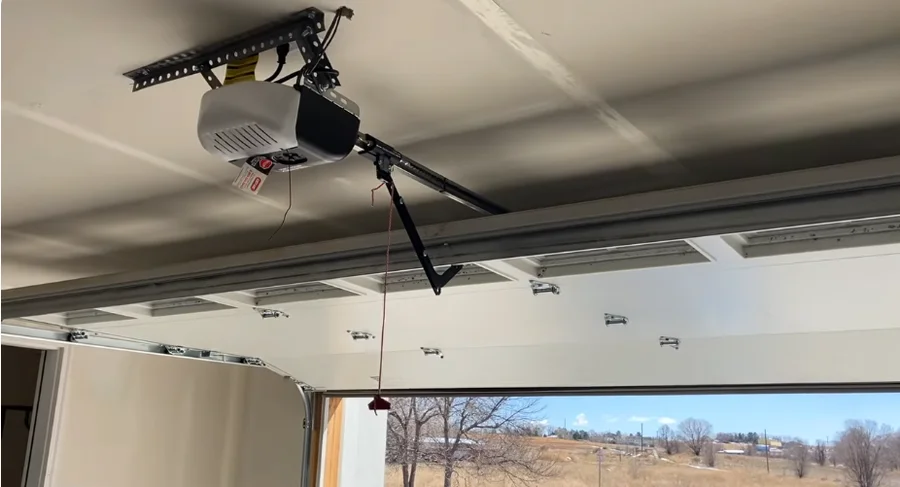
Battery backup is the best outage plan, and the manual release is the backup to the backup, so every St. Cloud household should know both. The manual release is the red cord hanging from the opener rail, and pulling it disconnects the door from the opener so the door can be lifted by hand, but it is a heavy lift, because a standard double door weighs far more than most people expect, and the springs, not your arms, are what make it feel light.
Never pull the release while the door is raised, partly open, or damaged, and never pull it if you suspect a broken spring, because a door that is disconnected from the opener can fall, and a falling garage door can cause a serious injury.
Backup power means you may never need the release at all, and that is the point of having one. Keep a usable key for another entrance to the house, and make sure everyone in the household knows where it is, because a garage door battery backup keeps the garage working, but it does not help if the remote is inside the garage and the car is outside.
Keep a flashlight in the garage, and limit battery use to the trips you really need, because every cycle during an outage uses charge that may be needed later. If your opener has no backup and the garage is the only entrance, talk to a garage door professional about a compatible access solution before the next storm, because the time to plan an outage is not the night the power goes out.
Garage Door Battery Backup Costs in Context
Backup power costs less than most people expect, but the only honest way to talk about price is to separate the national context from a St. Cloud quote. Nationally, an add-on backup battery unit for a compatible opener is often around $150 for the part, before fitting, and a replacement battery alone is usually much less, while a new opener with a battery included costs several times more. Those are national figures for context only, and they are not a St. Cloud quote, because the real price depends on your opener model, the battery type, and whether the door needs any other work at the same time.
It is also a running cost, not a one-off purchase, because the battery itself needs replacing every one to five years, depending on the model and how often it is used.
A battery that has never been tested may look fine and be flat when it matters, so the real cost of owning one is the battery plus a test before storm season, and that test is far cheaper than a lockout during a hurricane. The price for any battery, kit, or opener work in St. Cloud is confirmed before work begins, so you can compare the three options in the decision table above and choose the one that fits your opener, your door, and your budget, without any surprise on the day.
Garage Door Battery Backup in St. Cloud, FL: The Bottom Line
Backup power is a small part that solves a big St. Cloud problem, because it keeps the largest door in your house working when the power does not. The facts to remember are simple: a fully charged backup battery gives about 24 hours of standby power or roughly 20 to 50 cycles, it needs replacing every one to five years, it cannot fix a broken spring or a jammed door, and it cannot be added to every opener, so the model number is the first thing to check. The beeps and coloured lights on the motor unit are your early warnings, and a test before storm season is worth far more than a test during a storm.
If your opener has no backup, or the battery is old and untested, the next step is a check, not a guess. A technician can confirm the model, test the battery and the charging system, check the door balance, and give you a price before any work begins, so you go into the next storm knowing the door will open. Call (407) 674-3803 to book a battery and opener check in St. Cloud, FL, and ask for the price to be confirmed before work starts.
Related St. Cloud Garage Door Guides
A garage door battery backup question is often linked to another fault. See also: a garage door that will not open in St. Cloud, a garage door that closes then opens, hurricane garage door prep in St. Cloud, belt vs. chain vs. smart openers, a garage door opener that hums, a garage door off track in St. Cloud, garage door lubrication in St. Cloud, and garage door cable replacement in St. Cloud.
Manufacturer guidance on battery backup is published by LiftMaster, on how battery backup works during a power outage, and the risks of being trapped by a garage door in an outage are described by Chubb, on getting out of your garage when the power goes out. Both stress that springs, cables, and bottom brackets under tension should be handled only by a trained technician.
Frequently Asked Questions About Garage Door Battery Backup
Does a garage door battery backup work during a hurricane power outage?
Yes, a garage door battery backup is made for exactly that situation. When the power fails, a compatible opener switches to battery power on its own, and a fully charged garage door battery backup usually gives about 24 hours of standby power or roughly 20 to 50 open and close cycles. Save the battery for essential trips, because it needs about 24 hours to recharge once the power returns.
How long does a garage door battery backup last?
A garage door battery backup lasts about 24 hours of standby power on a full charge, or roughly 20 to 50 complete cycles, depending on the opener model, the battery size, and the weight of the door. The battery itself usually needs replacing every one to five years, depending on the model, because its capacity falls with age even if it has never been used in an outage.
Can I add a garage door battery backup to any opener?
No, a garage door battery backup cannot be added to every opener. Some modern openers include a battery, some accept a specific add-on kit made for that exact model, and some older openers have no battery connection at all. Check the model number on the opener label and in the manual before buying any battery or kit, because a brand name alone does not prove compatibility.
Why is my garage door opener beeping?
An opener usually beeps because its garage door battery backup is talking to you. Many models beep every couple of seconds while running on battery power, and about every 30 seconds when the battery is low. A beep that continues after the power returns usually means the battery is not recharging. Check the light colour and your manual, and call for a check if the beeping does not stop.
What do the coloured lights on my garage door opener mean?
The coloured light on the motor unit reports the state of your garage door battery backup. Green usually means the battery is charged and ready, orange usually means the opener is running on battery power or the battery is charging, and red usually means the battery has drained and cannot recharge. The exact meanings differ by model, so always confirm them in your own opener manual.
Will my garage door battery backup open a door with a broken spring?
No, and you should not try it. A garage door battery backup powers the opener motor, but the springs do most of the lifting, so a broken spring, a frayed cable, or a jammed door still needs a repair first. If the door is crooked, grinding, or struggling to move, stop using the opener and call a technician, because battery power never makes a damaged door safe.
Does a smart opener work when the power goes out?
A smart opener does not work during a power outage unless it also has a garage door battery backup, and even then the app may not work. The battery powers the motor, but the app needs a working internet connection, and an outage often takes the router down too. Keep a physical remote within reach, because the app is not a reliable outage plan.
How do I test my garage door battery backup?
Test a garage door battery backup only when the door runs smoothly on mains power and only by following your own opener manual. Most manuals describe unplugging the opener with the door fully closed, running one open and close cycle, then plugging it back in and allowing about 24 hours to recharge. If any step is unclear or unsafe to reach, have a technician run the test instead.
How often should a garage door battery backup be replaced?
A garage door battery backup should be replaced every one to five years, depending on the model, or sooner if it beeps, shows a red light, runs the door very slowly, or fails a test. LiftMaster guidance puts battery life at roughly one to two years under normal use, while other manufacturers allow three to five years. Always use the exact replacement battery your model calls for.
Is a garage door battery backup worth it in St. Cloud, FL?
Yes, for most St. Cloud homes it is worth it, because outages here come with summer thunderstorms and hurricane season, and the garage is often the main way in and out. A garage door battery backup keeps the door working for about a day of normal use and costs far less than a new opener. The price is confirmed before work begins.