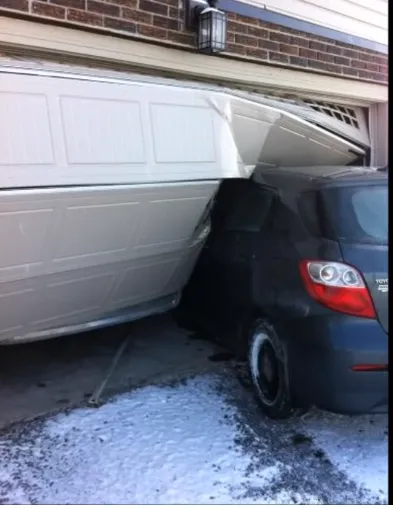
Garage Door Panel Dent Repair in St. Cloud, FL: Fix, Replace, or Leave It?
A dented garage door panel is one of the most common garage door problems in St. Cloud, and it usually starts with something ordinary. A basketball bounces off the door during a driveway game, a car bumper kisses the bottom panel while parking, or storm debris hits the door during a summer downpour. The dent may look small from the street, yet it can change how the door moves, let water and humid air into the panel, and slowly rust the steel underneath cracked paint. That is why garage door dent repair starts with a proper look, even when the door still opens and closes.
This guide helps you judge a dent the way a technician would, starting with where it sits and how deep it goes. It explains garage door dent repair options for small cosmetic dents, the rules for replacing one panel, and the signs that a whole new door is better value. Each section starts with the problem and ends with the solution, so you can act on one section alone, and you will know exactly what to tell a technician when you call. Calling connects you with an independent local technician who confirms the final price before any work begins.
Garage door dent repair depends on where the dent sits and how deep it goes. A shallow dent in the middle of a panel is often cosmetic, while a crease near a hinge, seam, or bottom bracket is structural and needs a technician. If one panel is badly damaged but a matching panel is still made, replacing that panel often costs less than a new door.
Garage Door Dent Repair: What a Panel Is, and Why One Dent Matters
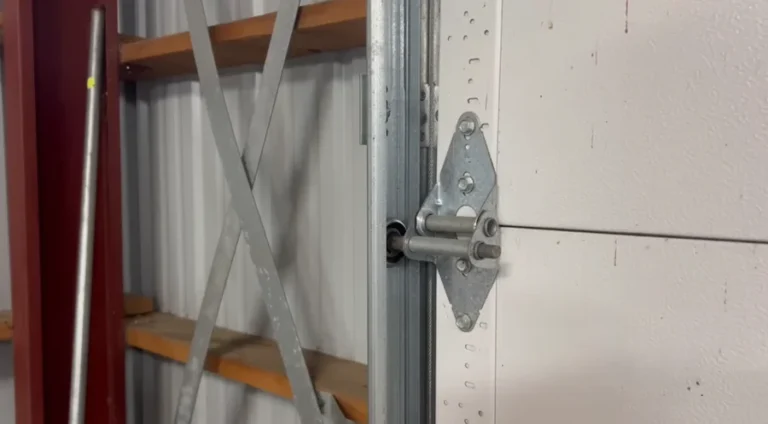
Most modern garage doors are sectional doors, made of three to eight horizontal panels joined by hinges, and each panel moves on its own as the door bends over the top. That design is good news after a dent, because one damaged panel can often be repaired or replaced without replacing the whole door. It also means a dent is never just a mark on a flat surface, because a bent panel can pull on the hinges, rollers, and tracks next to it. A door that looks fine from the outside can still bind, squeak, or wear unevenly every time it runs.
A small dent also matters because garage doors face the weather every day in St. Cloud. Heat, humidity, and driving rain work their way into cracked paint and exposed metal, and a dent that breaks the finish can turn into rust far faster than a clean panel would. Inside an insulated panel, a deep dent can crush or split the insulation, which leaves a weak spot that flexes more with every cycle. That is why competitors and technicians alike warn against leaving a dent for months, even when the door still works, because a cheap cosmetic problem can grow into a track, roller, or opener problem.
Garage Door Dent Repair: The Five-Minute Dent Check
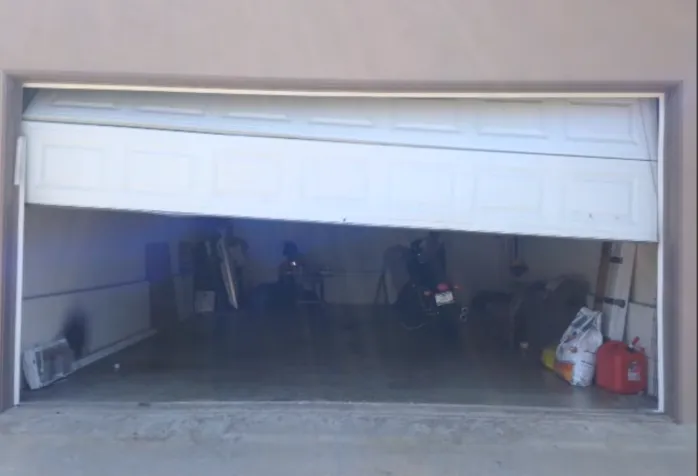
Start with a calm, hands-off look at the door, and do not touch springs, cables, drums, or bottom brackets at any point in this check. Look at the dent from outside in daylight, then look at the same panel from inside the garage, because damage on the inside face tells a different story from damage on the outside. Run the door once, if it moves freely and safely, and listen for grinding, sticking, or a lopsided motion that was not there before the dent. If the door binds, sags to one side, or will not close fully, stop using it and call, because forcing it can bend the track or strain the opener.
Write down four facts before you call, because they decide almost every garage door dent repair quote. Note which panel is dented, counting from the bottom, and whether the dent is in the middle of the panel or near an edge, hinge, or seam. Note whether the metal is smoothly pushed in or sharply creased, cracked, or split, and whether paint is broken around the impact point. Note the door brand and model from the label inside the door, if you can read it safely, and take clear photos of both faces of the damaged panel. Those photos and notes save a second visit and help a technician say whether a matching panel is even available.
- Find the panel number, counting up from the bottom panel, and note whether the dent is mid-panel or near an edge.
- Check the inside face of the same panel for cracks, splits, bowed metal, or broken hinge points.
- Watch one full open and close for binding, grinding, sagging, or a gap at the top, sides, or floor.
- Photograph both faces of the panel and the inside label, without loosening any bracket or fastener.
- Stop using the door and call if it binds, hangs crooked, or has a loose cable, roller, or hinge.
Garage Door Dent Repair: Cosmetic or Structural?
The single most useful distinction in garage door dent repair is between a cosmetic dent and structural damage, because the two lead to very different fixes. A cosmetic dent is shallow, smoothly pushed in, and sits in the middle of a panel, away from hinges, seams, struts, and the bottom bracket. The door still runs smoothly, the panel still seals, and the finish may be scuffed but not split. A structural dent is creased or folded rather than smoothly dished, sits within a few inches of a hinge, strut, or seam, or has cracked or split the panel skin. The door may stick, grind, sag, or leave a gap when closed, and that is a technician job, not a weekend fix.
The checker below turns what you see into the next step, and it is the tool competitors lack in one place. Use it honestly, because in garage door dent repair, pushing, hammering, or filling a creased panel can stretch the metal further and rule out a clean repair later. A dent that affects how the door runs is structural even if it looks small, and a large-looking shallow dent in the middle of a panel can still be cosmetic if the door runs true. When in doubt, treat the dent as structural until a technician has seen it, because the cost of an inspection is far smaller than the cost of a door forced off its track.
| Garage Door Dent Repair Checker: What You See | What It Usually Means | Do This Next |
|---|---|---|
| Shallow, smooth dent in the middle of a panel, door runs smoothly | Cosmetic dent | Consider a cosmetic repair or leave it and watch it |
| Crease, fold, crack, or split in the metal | Structural damage | Stop forcing the door, call a technician |
| Dent near a hinge, seam, strut, or bottom bracket | Structural risk, even if small | Do not loosen any bracket, call a technician |
| Door binds, grinds, sags, or will not close fully after the dent | Track, roller, or balance problem | Stop using the door, call a technician |
| Paint cracked or flaking around the dent | Rust risk, even if the dent is shallow | Repair the finish soon, before rust spreads |
| Two or more panels dented, for example by hail or a vehicle | Often a replacement decision | Compare one-panel cost against a new door |
| Dent with water, daylight, or a draft through the panel | Seal or panel joint failure | Call for an inspection, not just a cosmetic fix |
Garage Door Dent Repair in St. Cloud: Why Dents Happen So Often
St. Cloud gives garage doors more chances to get dented than a quiet, mild climate does, and the causes are easy to recognise. Driveway games are a classic cause of garage door dent repair work, because basketballs, bikes, and scooters live close to the door in family homes, and one bad bounce is enough to dimple a thin steel panel. Parking is another, because a garage used as the main entrance sees several careful reverses a day, and a moment of distraction can push a bumper into the bottom panel. Summer storms add flying branches, bins, and debris, and hurricane-season wind can throw objects that a calm-weather door would never meet.
Florida heat and humidity then make a dent worse after it happens, which is why a St. Cloud dent should not sit ignored through a wet summer. Cracked paint lets humid air and rain reach bare steel, and rust spreads under the finish long before it shows as a bubble. Sun-baked panels also fade, which matters later if a replacement panel must match the rest of the door, because a new panel in the factory colour can still stand out against a faded door. That combination of frequent small impacts and harsh weather is why a quick dent check, and a quick finish repair where the paint is broken, pays off here more than in a dry climate.
Garage Door Dent Repair: What Small-Dent Repair Usually Involves
For a shallow cosmetic dent in the middle of a panel, garage door dent repair is usually a finish job, not a structural job, and it has three broad options. A paintless-style repair reshapes the metal from behind the panel where access allows, leaving the factory finish untouched, and it suits smooth, shallow dents with unbroken paint. A fill-and-finish repair levels a shallow dent with filler, then sands, primes, and paints it to match, and it suits dents where the paint is already scuffed or the surface is slightly uneven. A suction or gentle pressure approach can lift a very shallow, recent dent on a smooth metal panel, but it will not fix creased metal, and hard strikes or heat applied carelessly can crack the finish and make the repair worse.
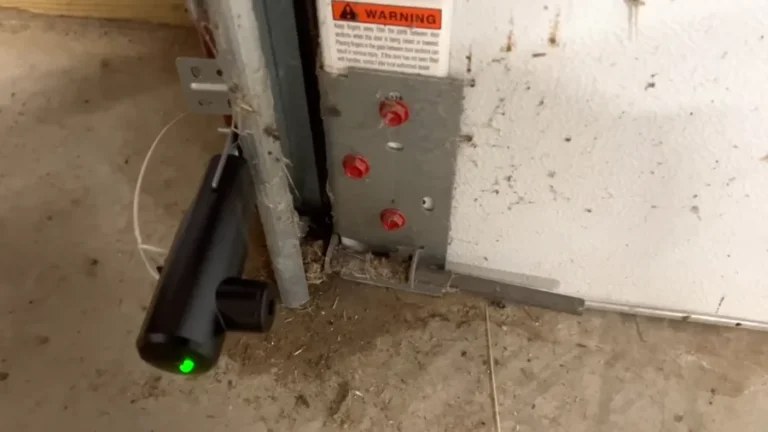
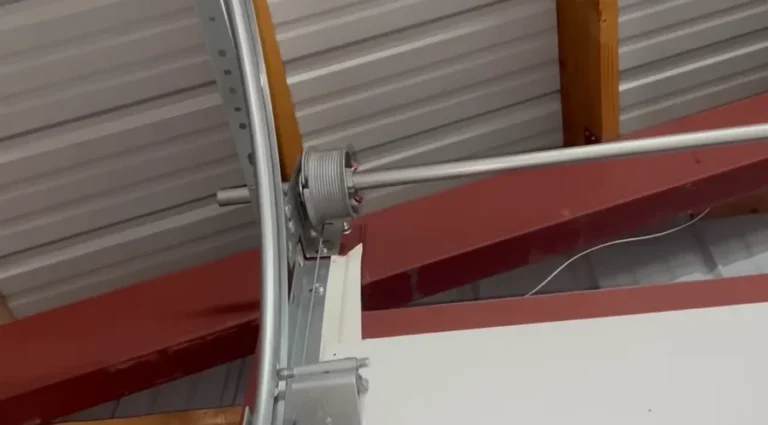
None of these options should come near springs, cables, drums, or bottom brackets, and that boundary is absolute. Bottom brackets stay under cable tension even when the door is closed, and loosening one can release force without warning, so any dent that touches that zone belongs to a technician. A homeowner finish repair is only sensible when the retainer, hinges, and brackets are untouched, the door runs smoothly, and the dent is clearly mid-panel and cosmetic. If the dent is near an edge, if the panel is creased, or if the door binds at all, the right move is an inspection first, because a cosmetic fix on a structural dent hides the problem while the track and opener take the strain.
Garage Door Dent Repair: When One Panel Can Be Replaced
Replacing a single panel is often the best value in garage door dent repair, but only when four conditions line up at the same time. First, the damage must be limited to one panel, with the other panels, hinges, rollers, and tracks still in good shape. Second, the exact matching panel must still be made, with the same width, height, profile, joint design, hinge pattern, and insulation, because two doors that look alike from the street can use different sections. Third, the door must be young enough, or common enough, that the panel can be sourced without costly adaptation, which gets harder after about five to seven years and is often impossible after ten. Fourth, the colour must match well enough to live with, since sun fading means even a correct factory colour can look different on an older door.
A technician replacing a panel in garage door dent repair will also check the parts around it, because a dent rarely affects one panel alone. The balance and track alignment are checked, the safety sensors and auto-reverse are tested, the weather seal is inspected, and worn rollers or hinges found during the job are reported before extra work is done. That full check is part of the value of a panel job, and it is why a panel replacement done properly takes longer than swapping a flat board. If the panel cannot be matched, if two or more panels are damaged, or if the door is near the end of its life, the honest advice is usually a new door, and a written comparison of both scopes helps you see why.
Garage Door Dent Repair Costs in Context
National figures are context only, never a St. Cloud quote, and your final price is confirmed by the independent local technician before any work begins. Competitor guides and national cost guides agree on the broad shape of garage door dent repair pricing, even when their exact ranges differ by region and door type. A minor cosmetic repair commonly falls around $100 to $300, a moderate repair with cracked paint around $250 to $400, and a single panel replacement around $300 to $900, with some national guides putting panel replacement at $250 to $1,000. A full new door is a separate, larger job, commonly $700 to $3,500 or more depending on size, material, and insulation, so it should only be compared as a complete installed scope, not as a panel price.
| Garage Door Dent Repair Option | National Cost Context | Best For |
|---|---|---|
| Minor cosmetic dent repair | $100 to $300 | Small, smooth, mid-panel dents with unbroken paint |
| Moderate dent repair, cracked paint | $250 to $400 | Dents needing filler, primer, and paint matching |
| Single panel replacement | $300 to $900 | One badly damaged panel on a newer, matchable door |
| Multiple panel replacement | $600 to $1,500 | Two or more damaged panels, if matching panels exist |
| Full door replacement | $700 to $3,500 or more | Old, unmatched, or multi-panel damage |
| New insulated steel door, installed (context) | About $1,400 single, $2,150 double | Comparing a new door against repeated panel work |
Two simple rules help turn those garage door dent repair ranges into a decision, and both appear across competitor guides in different forms. The first is the 40% rule: if replacing the damaged panels would cost more than about 40% of a new door, or the joints will not match, a new door is usually the smarter buy. The second is the repair-or-replace rule from the site’s own guide: repair when one part is broken and the rest of the door is sound, and replace when several panels are damaged, repairs keep adding up, or the door is 15 to 20 years old or more. Ask for both scopes in writing when both are feasible, with parts, labour, finish expectations, lead time, and what is reused, so the decision is about total value rather than one headline price.
Garage Door Dent Repair: Insurance, Photos, and the Paperwork That Helps
A dent caused by a sudden accident is treated very differently from wear and tear, and that distinction decides most insurance questions. Storm damage, a vehicle backing into the door, vandalism, and falling objects are often covered by a home or car policy, minus your deductible, while dents from age, rust, or repeated small knocks usually are not. Read your own policy before paying out of pocket, and do not assume a claim is worthwhile for a small cosmetic dent, because a claim below or near your deductible may cost more in the long run than a simple repair. A technician’s written scope, with photos, helps a garage door dent repair decision either way, because it separates cosmetic work from structural work and shows exactly which panels and parts are involved.
Take photos the same day if you can do so safely, because dents, paint cracks, and track alignment are much harder to prove weeks later. Photograph the full door from the street, a close view of the dent, the inside face of the damaged panel, and the label inside the door showing brand and model. Note the date, the cause as far as you know it, and whether the door still runs normally, and keep any garage door dent repair quote with those photos. If the dent came from a vehicle, note whether the damage is to one panel or more, because a multi-panel impact often changes both the insurance scope and the repair-or-replace decision.
Garage Door Dent Repair: What a Technician Checks on a Dented Door
A technician inspection for garage door dent repair is a system check, not just a look at the dent, and knowing the steps helps you judge a quote. The inspection starts with the damaged panel itself, checking for creases, cracks, split skins, crushed insulation, torn hinge mounts, and gaps when the door is closed. It then moves to the parts the dent can strain: rollers, hinges, tracks, cables, springs, and the opener attachment, especially the top panel, where a bent section can transfer abnormal force to the opener. Balance, travel limits, force settings, and auto-reverse are tested at the end, because a door that looks repaired but runs out of balance will wear out its next part sooner.
That process also explains why garage door dent repair panel work is not a simple do-it-yourself swap, even when the panel itself looks easy to reach. Sections are heavy, they are connected to hardware under spring tension, and the tracks must line up precisely or the door will bind. A technician will also tell you plainly when a panel cannot be matched, when painting the whole door is the only way to get an even finish, or when a new door with better insulation and wind resistance is better value for a St. Cloud home. That honest scope, confirmed in price before work, is the real product of the visit, and it is worth more than a quick cosmetic patch that leaves a bent track behind.
Garage Door Dent Repair: Preventing the Next Dent in St. Cloud
Prevention is cheaper than any garage door dent repair, and most of it is about giving the door a little more room and a little less exposure. Mark a clear stopping point in the garage, with a tennis ball guide or a laser parking guide, so a bumper stops short of the bottom panel every time. Move driveway games off the apron directly in front of the door, and trim branches and shrubs that scrape the door or can break off in a storm. A wall bumper or parking stop inside the garage is a small addition that prevents the most common dent of all, the slow parking bump that nobody notices until the paint is cracked.
Storm preparation helps too, and it links this garage door dent repair guide to the site’s hurricane prep guide for St. Cloud homes. Before a forecast storm, move bins, furniture, and loose items away from the door, and check that the door closes and locks fully, because a door left ajar catches wind and debris far more easily. Once a year, wash the door, check the finish for chips and rust, and look at hinges, rollers, and seals during the same walk-around, because a small chip repaired early never becomes a rust hole. If hail or high wind is common on your street, ask about impact-resistant panels when a new door is eventually needed, rather than replacing like with like after every storm.
Garage Door Dent Repair: What to Tell a Technician When You Call
Use these short lines, filling in the brackets, for a garage door dent repair problem:
- “My garage door dent repair problem is in St. Cloud.”
- “The dent is on panel [number from the bottom], in the middle / near an edge / near a hinge.”
- “The metal is smoothly dented / creased / cracked / split, and the paint is intact / cracked.”
- “The door runs smoothly / binds / grinds / sags / will not close fully since the dent.”
- “The door brand and model, from the inside label, are [brand and model, if known].”
- “I have photos of both faces of the panel and the inside label.”
- “Can you confirm the price for garage door dent repair before work begins, and give me both a panel scope and a new-door scope if both are possible?”
Add your neighbourhood — Downtown St. Cloud, Stevens Plantation, Canoe Creek, Harmony, Narcoossee Road, Kissimmee, Lake Nona, Poinciana, or Holopaw — so the visit can be planned, and say at once if the door is crooked, off track, or has a loose cable, because that changes the visit from a cosmetic quote to an urgent inspection. Do not guess at a panel model if you are unsure, because a photo of the inside label is more useful than a confident but wrong model name, and never loosen a bracket to get a better photo.
Conclusion
Garage door dent repair in St. Cloud comes down to three questions, asked in order, and they give you the answer in most cases. Where is the dent, and is it cosmetic or structural, because a mid-panel dimple and a crease near a hinge are different jobs entirely. Can one matching panel be found for a door that is otherwise sound, because a matched panel on a newer door is usually far better value than a whole new door. And does the total repair cost stay well below the cost of a new door, because once panel work passes about 40% of a new door, replacement usually wins. Answer those three questions with photos and a technician inspection, and the choice stops being a guess.
A dent that is small, smooth, and mid-panel can often be handled by garage door dent repair and refinishing, and a single badly damaged panel on a newer door can often be replaced on its own. A creased, cracked, or multi-panel dent, a door that binds or hangs crooked, and a door whose panels can no longer be matched are all signs to compare a new door properly, not to patch and hope. Whatever the answer, get the price confirmed before work begins, and keep the door safe in the meantime by not forcing a door that binds.
Serving all of St. Cloud for garage door dent repair — Downtown St. Cloud and the Lakefront, Stevens Plantation, Canoe Creek, Harmony, and the Narcoossee Road corridor, ZIPs 34769, 34771, 34772, and 34773, plus nearby Kissimmee, Buenaventura Lakes, Lake Nona, Hunters Creek, Meadow Woods, Southchase, Campbell, Poinciana, and Holopaw.
Related St. Cloud Garage Door Guides
A garage door dent repair case is often linked to another fault. See also: a garage door off track in St. Cloud, why your garage door is so loud, repair or replace your garage door, Florida humidity and garage door rust, garage door weatherstripping in St. Cloud, hurricane garage door prep in St. Cloud, garage door spring repair cost in St. Cloud, and insulated garage doors in St. Cloud.
Safety guidance for garage door work is also covered by the U.S. Consumer Product Safety Commission rules for automatic garage door openers and the DASMA garage door systems safety checklist, which both stress that springs, cables, and bottom brackets under tension should be handled only by a trained technician.
Frequently Asked Questions About Garage Door Dent Repair
Can a small garage door dent be left alone safely?
A shallow, smooth dent in the middle of a panel can often be left alone if the door runs smoothly and the paint is unbroken, but watch it, do not forget it. If the paint is cracked, rust can spread under the finish in St. Cloud humidity, and if the door binds, grinds, or sags, the dent is no longer cosmetic. A photo now makes any change easy to compare.
How much does garage door dent repair cost in national terms?
National context for garage door dent repair, not a St. Cloud quote, puts a minor cosmetic repair around $100 to $300, a moderate repair with cracked paint around $250 to $400, and a single panel replacement around $300 to $900. Your final price depends on the door size, material, panel availability, and finish matching, and it is always confirmed by the independent local technician before any work begins.
Can one dented garage door panel be replaced on its own?
Yes, when the damage is limited to one panel, the exact matching panel is still made, and the rest of the door is sound. The replacement for garage door dent repair must match in width, height, profile, joint design, hinge pattern, and insulation, because two similar-looking doors can use different sections. If the panel is discontinued or the colour cannot be matched acceptably, a new door may be better value.
Is a dent near a hinge or bottom bracket dangerous?
Yes, it can be, because damage near a hinge, seam, strut, or bottom bracket can affect how the door carries load and moves in its tracks. Bottom brackets in particular stay under cable tension even when the door is closed, so never loosen one. Any dent in that zone should be inspected by a technician before the door is used normally again.
Will garage door dent repair fix a door that binds or grinds?
Only if the binding comes from the dent itself, and often a binding door needs more than a cosmetic fix. A bent panel can twist a section, shift a roller, or pull a track out of line, and those problems must be corrected as part of the repair. If your door binds, grinds, sags, or will not close fully after a dent, stop using it and call for an inspection.
Does homeowners insurance cover a dented garage door?
Many policies cover sudden, accidental damage such as a vehicle impact, storm debris, vandalism, or a falling object, minus your deductible. Normal wear, age, rust, and repeated small knocks are usually not covered, so read your own policy before claiming for garage door dent repair. Photos taken on the day, plus a written scope showing which panels are damaged, make any claim much easier to support.
How do I know if my dented door needs a new door instead?
A new door is usually better value when two or more panels are damaged, when a matching panel cannot be sourced, when the door is 15 to 20 years old, or when panel work would cost more than about 40% of a new door. A written comparison of both scopes, with parts, finish, and lead time, turns that choice from a guess into a clear comparison.
Can a dent affect my garage door insulation?
A shallow dent on the outside skin usually does not, but a deep dent can crush insulation, split a panel skin, or open a joint gap, weakening both insulation and structure. If the panel feels soft, bowed, or lets in daylight, air, or water, check the insulation and seal as part of the repair. A panel that no longer seals properly should not be treated as cosmetic.
What should I photograph before calling about garage door dent repair?
Photograph the full door from the street, a close view of the dent, the inside face of the damaged panel, and the inside label showing brand and model. Note which panel is dented, counting from the bottom, whether the metal is creased or cracked, and whether the door still runs smoothly. Those photos help a technician judge matching, scope, and price before the visit.
How can I prevent garage door dents in the future?
Mark a parking stopping point with a ball or laser guide, keep driveway games off the apron in front of the door, and trim branches that scrape the door in wind. Move bins and items away before storms, repair paint chips to stop rust, and check hinges, rollers, and seals once a year. If hail is common on your street, ask about impact-resistant panels when a new door is due.