Garage Door Child Safety in St. Cloud, FL: 7 Rules for Kids and Pets
A garage door is the largest moving object in most St. Cloud homes, and it is also the one children and pets understand least. A toddler sees a door that moves when a button is pressed, a dog sees an opening to run through, and neither can judge the weight behind it or how fast it closes. That is why garage door child safety matters, because a door that works perfectly for an adult can still hurt a child who runs under it, a pet that darts through it, or a small hand in a closing panel joint. Good garage door child safety starts with understanding that risk, not with blaming the child or the dog.
The good news is that modern openers are built with two separate safety systems, and the rules that keep them working are simple enough to teach in one evening. This garage door child safety guide explains what those systems are, where the sensors must sit, how to test them once a month, where the wall button and remotes should live, and the seven family rules that protect kids and pets in a St. Cloud home. It also explains what to do if a test fails, and what to do in the frightening moment when a child or pet is caught, because knowing the steps in advance is what turns panic into action.
Nothing in this guide asks you to open the opener housing, touch mains wiring, or work on springs, cables, drums, or bottom brackets, because those parts hold the full weight of the door under high tension and are technician-only work. A garage door child safety check is about the parts a homeowner can see and test safely from the floor: the sensors, the wall button, the remotes, and the monthly reversal test. When any of those checks fails, the right move is to stop using the opener and call for a repair, with the price confirmed before work begins.
Garage door child safety means keeping the photo-eye sensors no higher than six inches off the floor, mounting the wall button at least five feet up, keeping remotes out of small hands, and testing the auto-reverse every month with a 2×4 laid flat in the door’s path. Teach children never to run under a moving door, and keep pets clear while it moves.
Why Is a Garage Door Dangerous for Children and Pets?
A garage door is dangerous for children and pets because it is heavy, fast, and silent about its weight. A typical residential door weighs between 130 and 250 pounds, and once it starts moving it keeps moving until the opener tells it to stop, which means a child or a dog in its path has only seconds to get clear. The International Door Association calls the garage door the largest moving appliance in a home, and that description fits, because no other household object of that size moves over the heads of the people who live there.
Children are at risk for a different reason than adults, and it is not carelessness. Toddlers crawl low to the floor, where a sensor beam can miss them if it sits too high, and older children often treat a closing door as a race to beat, running under it while it is still moving. The U.S. Consumer Product Safety Commission has reported that about 73 children between the ages of 2 and 14 have been trapped and killed under automatic garage doors since 1982, and most of those tragedies involved doors or openers that were older, damaged, or missing the safety devices that are standard today. That history is why garage door child safety rules exist in the first place.
Pets face a similar danger, and dogs are the most common victims. A dog that bolts out as the door rises will often bolt straight back in as it comes down, and a cat that slips under a half-open door can be caught by a door that no one realised was moving. Garage door child safety therefore has to cover pets as well as children, because the same sensors, the same tests, and the same family rules protect both, and a household that teaches its children the door rules should teach its pets the same waiting habit.
What Are the Two Safety Systems That Protect Kids and Pets?
Every modern garage door opener must have two separate forms of entrapment protection, and they work as a pair, not as alternatives. The first is contact auto-reverse, which sends the door back up when it touches something on the way down, and the second is a non-contact device, which in almost every St. Cloud home is a pair of photo-eye sensors near the floor.
Under the UL 325 safety standard, openers built since 1991 must reverse on contact, and openers built since 1993 must also have a second device such as photo eyes, so a home with an opener older than that may have only one layer of protection, or none at all. That pairing is the foundation of garage door child safety in every modern home.
The two systems protect against different failures, and that is why both matter. The photo eyes stop the door before it touches anything, by breaking an invisible beam across the opening, while the auto-reverse catches the case where the beam is missed, the sensor is dirty, or an object is too low or too thin for the beam to see. A door that has working photo eyes but a failed auto-reverse is only half protected, and a door with a working auto-reverse but no photo eyes is only half protected too, and half protection is not garage door child safety, so garage door child safety means checking both systems every month, not just the one that is easiest to see.
The monthly check is quick, and it is the single most important garage door child safety habit in this guide. The U.S. Consumer Product Safety Commission recommends testing the reversing features every month, and stopping use of the opener at once if a test fails, because a safety system that has quietly stopped working is more dangerous than a door that is plainly broken. The full test is described in its own section below, and it takes about two minutes with a 2×4 board and a broom handle.
The Six-Inch Rule: Where Should the Photo Eyes Sit?
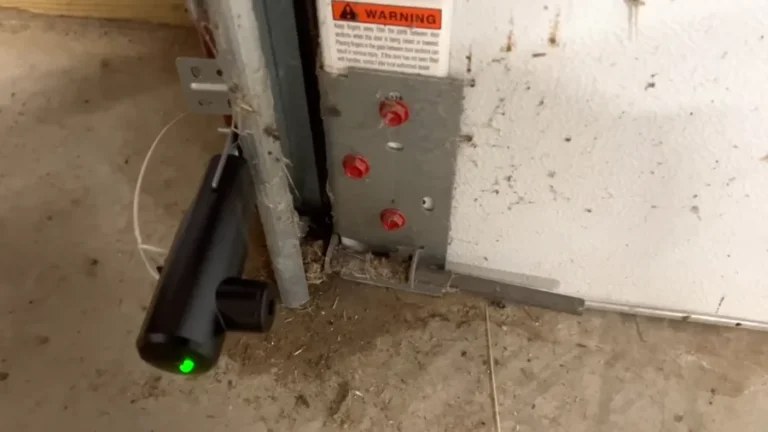
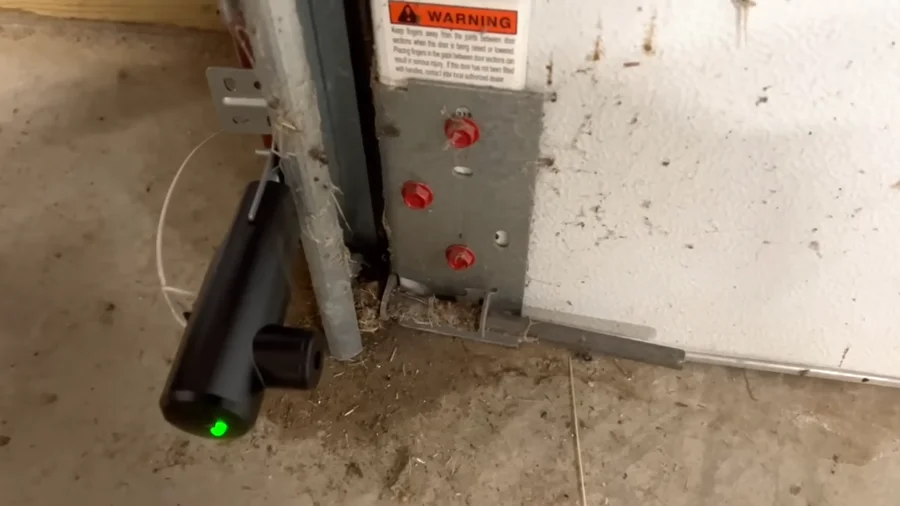
The photo eyes are the two small boxes mounted near the bottom of the door tracks, one on each side of the opening, and the invisible beam between them is what stops the door when something crosses the opening. One eye sends the beam and the other receives it, and when anything breaks the beam while the door is closing, the door must stop and go back up. That single beam is the most relied-on piece of garage door child safety equipment in the house. The rule that governs their height is simple, and it is the most important measurement in garage door child safety: the sensors must sit no higher than six inches above the floor.
The height matters because the beam is a single thin line, and a sensor mounted too high leaves a gap underneath it that a crawling child or a small dog can pass through without breaking the beam. The Door & Access Systems Manufacturers Association explains the six-inch rule in its safety guidance, and the U.S. Consumer Product Safety Commission gives a range of 4 to 6 inches, so a sensor at six inches or lower is correct and a sensor at nine or twelve inches is not.
Sensors sometimes get raised to clear a storage bin or a bicycle, and that is a mistake, because moving the bin is a small job and raising the sensor leaves a child-sized gap under the beam, and that gap is a garage door child safety failure, not a minor fault.
Checking the height is a two-minute job that any homeowner can do from the floor, and it belongs in every garage door child safety routine. Measure from the garage floor to the centre of the sensor lens, and if the number is more than six inches, have a technician lower the sensor and realign it, because the sensor bracket and the wiring should be handled by someone who knows the system. While you are there, wipe both lenses with a soft cloth and check the indicator lights: steady lights usually mean the eyes are lined up, while blinking or dark lights usually mean dirt, a bump, or a failing sensor.
How Do I Test the Auto-Reverse and Photo Eyes Every Month?
The monthly garage door child safety test has two parts, and both are worth doing on the same day so neither one is forgotten. The first part tests the contact auto-reverse, and it uses a 2×4 board laid flat on the floor in the centre of the door’s path. With the board in place, press the wall button or the remote to close the door, and watch what happens when the door touches the board: it must stop and reverse back up within about two seconds of contact, and if it crushes the board, pushes it along the floor, or keeps closing, the test has failed.
The second part of the garage door child safety test checks the photo eyes, and it needs nothing more than a broom handle or a cardboard box. Start the door closing, then pass the broom handle through the sensor beam near the floor, and the door must stop and go back up at once, before it reaches the floor. If the door keeps closing with the beam blocked, the sensors are misaligned, dirty, or failing, and the opener must not be used again until a technician has fixed them.
Run both tests with children and pets inside the house, not standing in the garage to watch, because a test is a real door movement and the whole point is to keep small bodies out of the way. If either garage door child safety test fails, unplug the opener and call for a repair, because the U.S. Consumer Product Safety Commission says an opener that fails to reverse must be disengaged until it is adjusted, repaired, or replaced. Never adjust the opener’s force setting yourself to make a test pass, because turning the force up can disable the safety reverse entirely, and a door that passes a test by pushing harder is more dangerous, not safer.
| Garage Door Child Safety Checker | What It Does | How to Check It | How Often |
|---|---|---|---|
| Photo-eye height | Keeps the beam low enough to see a crawling child | Measure floor to lens: 6 inches or less | Monthly |
| Photo eyes | Reverse the door when the beam is broken | Block the beam with a broom handle; the door must not close | Monthly |
| Auto-reverse | Sends the door back up on contact | Close the door on a 2×4 laid flat; it must reverse | Monthly |
| Wall button height | Keeps the door in adult hands | Button at least 5 feet above the floor, in view of the door | Each school year |
| Remotes and keypad | Keep the door out of small hands | Remotes on the car visor or up high, code shared only with older kids | Each school year |
| Door balance | Shows the springs still carry the door’s weight | A technician checks it during a garage door child safety tune-up; a door that drops or shoots up needs service | Yearly |
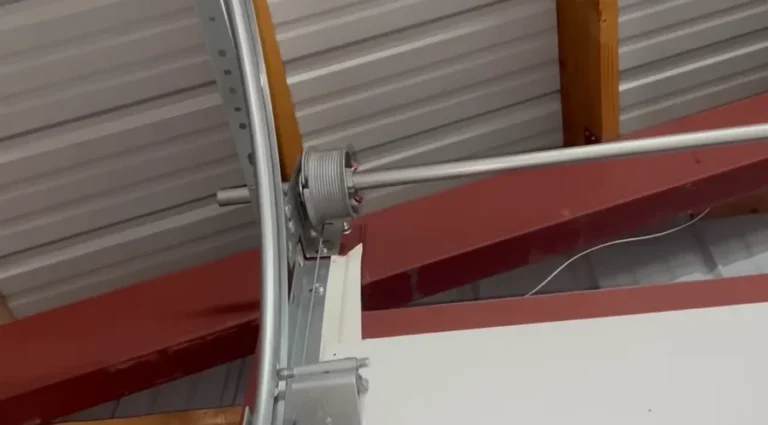
| Springs and cables | Hold the door’s weight under high tension | Look from the floor for gaps, fraying, or slack; never touch them | Monthly, from the floor |
Where Should the Wall Button and Remotes Live?
The wall button should be mounted at least five feet above the floor, in clear view of the door, and safely away from all moving parts, and that height is not a suggestion. The Door & Access Systems Manufacturers Association gives five feet as the minimum in its safety guidance, and the U.S. Consumer Product Safety Commission also says to keep the control out of small children’s reach, because a button at light-switch height is a toy to a four-year-old. If your button sits low, moving it up is usually a small job for a technician, and it is one of the cheapest garage door child safety fixes there is.
The button’s position matters as much as its height, because the person pressing it should be able to watch the whole door until it stops moving. A button around a corner, behind a car, or in a dark spot invites the press-and-walk-away habit, which is how children and pets end up under a door no one is watching. The garage door child safety rule is simple: press the button, watch the door until it stops, then go, and that rule should apply to every adult in the house first, because children copy what they see.
Remotes need the same garage door child safety thinking, because a remote in a cup holder or a toy bin is a remote in a child’s hand. Keep remotes clipped to the car visor, not loose in the car or on a kitchen counter, and treat an outdoor keypad code like a house key, shared only with children old enough to follow the door rules. A smart opener can help here, because many models send a phone alert when the door opens, which is useful once older children start coming home alone, but a phone alert is a warning, not a safety device, and it never replaces the sensors or the monthly test.
What Are the 7 Family Rules for Kids Around a Garage Door?
The seven rules below are the heart of garage door child safety, and they work best when the whole family learns them together, in the garage, with the door standing still. The first rule is that the garage door is not a toy, and it is never a game, because the “beat the door” race has killed children even on doors with working safety devices. The second rule is that nobody walks under a moving door, for any reason, and everyone waits at the house door until the garage door has fully stopped.
The third rule is that small hands stay away from the door sections, the hinges, the rollers, and the tracks, because the gaps between panels close as the door moves and can pinch or crush fingers in an instant. The fourth rule is that only an adult presses the wall button or a remote, and children never press either one to see what happens. The fifth rule is that the emergency release cord is never pulled by a child, and never pulled while the door is open, because a door with a broken spring can drop hard when it is disconnected from the opener.
- Rule 1 — The door is not a toy. Never race a closing door, ride it, or press the button to watch it move.
- Rule 2 — Wait until it stops. Nobody walks under a moving door; everyone waits until it has fully stopped.
- Rule 3 — Hands off the moving parts. Never put fingers between door sections, near hinges, rollers, or tracks.
- Rule 4 — Adults only on the controls. Only an adult presses the wall button or a remote.
- Rule 5 — Never pull the red cord. The emergency release is for adults only, and only when the door is fully closed.
- Rule 6 — Tell an adult about strange sounds. Grinding, banging, or a door that jerks or hangs crooked means stop and tell an adult.
- Rule 7 — Pets wait too. Dogs and cats stay inside the house door until the garage door has stopped.
Teaching the rules is a job for the adults, and it needs repeating, because a rule taught once at the start of the school year will be forgotten by Christmas. Walk through the rules again each school year, and again whenever a new child, a new pet, or a new babysitter joins the household, because the people who are newest to the house are the ones most likely to be in the wrong place at the wrong time. A garage door child safety routine that is taught once and then forgotten is no routine at all, and the families who stay safe are the ones who keep the rules short, visible, and repeated.
How Do I Keep Pets Safe Around the Garage Door?
Pets need their own version of the garage door child safety rules, because a dog does not understand a closing door and a cat does not wait for permission. The most common pet accident is the dog that bolts out as the door rises and then bolts straight back in as it comes down, straight into the path of a closing door, and the fix is a leash first, door second. Clip the leash on before anyone presses the button, hold the dog at the house door until the garage door has fully stopped, and only then walk out together, because a dog on a leash cannot dart under a moving door.
A door left half open is a second pet trap, because a dog can squeeze under a door that is only a foot off the floor, just as someone inside presses the remote to close it.
Never leave the door partly open as a dog door, a basic garage door child safety rule, and never leave the door open and walk away, because an open garage is an invitation to every pet and child in the neighbourhood, and a door that is left open is a door that will be closed by someone who has not checked who is underneath it. Keep pet beds, food bowls, and toys against the side walls, never under the door or in front of the photo eyes, because a bed in the beam will trip the sensors and a dog that sleeps in the doorway will be in the way when the door moves.
Cats are quieter than dogs, and that makes them harder to protect, because a cat can slip under a door that is closing before anyone notices it is there. Before pressing the button, look for the cat, call it by name, and watch the door until it stops, because a photo eye that sits at the right height will catch a cat crossing the beam, but a sensor that is dirty, misaligned, or mounted too high may not.
If the door keeps reversing for no clear reason, a garage door child safety check starts by looking for a pet bed, a bin, or mud on the sensor lenses, because the sensors are usually doing their job, and the thing blocking them is often the thing they are meant to protect.
What Should I Do If a Child or Pet Is Caught Under the Door?
Stay calm and act in this order, because the first seconds are the ones that matter most. This is the garage door child safety emergency every parent should rehearse before it happens.
First, press the wall button or the remote, because on most openers a press while the door is moving will stop it or send it back up, and that is the fastest way to take the weight off. Second, if the door is down and will not respond to the button, pull the red emergency release cord on the opener rail, but only if the door is fully closed, and then lift the door by a handle near the bottom, never by gripping at the panel joints where fingers can be pinched.
- Press the wall button or remote. A press while the door is moving usually stops or reverses it.
- If the door will not respond, pull the red release cord. Only when the door is fully closed; then lift by a handle near the bottom.
- If the door will not budge or feels far too heavy, call 911 at once. A spring may be broken; never force the door.
- Get care. Call 911 if a child is hurt or was pinned; call your vet for a pet.
- Unplug the opener. A door that has hurt someone must not be used again until a technician has checked it.
Never pull the emergency release while the door is open or partly open, because with a broken spring the door can drop hard and fast, and a falling door can cause a serious injury of its own, and that rule is part of garage door child safety, not an afterthought.
After the emergency is over, do not use the opener again, even if it seems to work normally, because a door that has touched someone and not reversed has a failed safety system, and the U.S. Consumer Product Safety Commission says such an opener must be disengaged until it is adjusted, repaired, or replaced. A technician should test both the auto-reverse and the photo eyes, check the springs and cables, and confirm the door is safe before it is used again, with the price confirmed before work begins.
When Should I Call a Garage Door Technician?
Garage door child safety means stopping use of the opener and calling a technician at once if the door fails the 2×4 test, closes with the beam blocked, or ever touches someone without reversing, because those are not minor faults. The same applies if the photo eyes will not stay lined up, if their lights blink or stay dark, if the opener has no photo eyes at all, or if the door suddenly feels heavy, hangs crooked, or makes a loud bang. A loud bang usually means a spring has broken, and a door with a broken spring is a door that can fall, so keep children and pets well away from it until it is repaired.
Some warning signs are quieter, but they still need a professional eye. A door that jerks, shakes, or moves unevenly may have a track problem or a spring losing tension, a cable that looks frayed or slack can snap without warning, and a bottom bracket that looks loose is under tension and must never be touched by a homeowner.
Garage door child safety depends on the springs and cables being sound, because the safety sensors can only stop a door that is mechanically healthy, and no sensor can save a child from a door that falls because a cable failed. A yearly professional tune-up checks the springs, cables, rollers, opener, and safety systems together, and it is the best way to catch a problem while it is still small.
An opener with no photo eyes at all deserves a special mention in any garage door child safety guide, because it is more common than most St. Cloud homeowners think. Any opener installed before 1993 may have no second entrapment device, and a door that old has likely outlived its other safety features too, so the right answer is usually a replacement opener with modern sensors, battery backup, and rolling-code remotes. A technician can confirm the opener’s age from its model label, test the safety systems, and explain the options, with the price confirmed before any work begins, so the decision is made on facts, not on guesswork.
Garage Door Child Safety in St. Cloud, FL: Storms, New Homes, and Busy Garages
St. Cloud adds its own layer to garage door child safety, because the garage here is not a storage room that is opened once a week. Summer thunderstorms, hurricane season, and the long hot months mean the garage door runs many times a day, as children come and go, dogs are let in and out, and groceries, bikes, and sports gear move through the opening. New subdivisions across eastern Osceola County are full of young families, and many of those homes have double doors that are wider and heavier than a single door, which makes the safety systems more important, not less.
Storm season makes the monthly garage door child safety test more urgent, not less, because a door that is already out of balance or has a failing sensor is the door most likely to fail when the weather turns. Florida’s afternoon storms also mean the garage often becomes the mudroom, with wet shoes, dog towels, and bins piled near the door, and every one of those piles is a trip hazard that can end up in front of a photo eye. Keep the path clear, keep the bins against the side walls, and run the monthly test before storm season, not during it, because a safety check done in calm weather is a check that actually gets done.
The referral model of this site matters here too, because calling connects you with an independent local technician who confirms the final price and performs the work, and the site does not send its own crews. That means a garage door child safety visit is a visit from a local technician who knows St. Cloud homes, St. Cloud doors, and the Florida Building Code rules that apply here, and it means the person who checks your sensors and springs is the person who will fix them. The price is confirmed before work begins, so a family can book a safety check without worrying about a surprise on the day.
Garage Door Child Safety in St. Cloud, FL: The Bottom Line
Garage door child safety comes down to three things that any St. Cloud family can do this weekend: keep the photo eyes at six inches or lower, test the auto-reverse and the photo eyes every month, and teach the seven family rules until everyone in the house knows them by heart. Those three habits cover the sensors, the tests, and the people, and together they are the core of garage door child safety, stronger than any single safety device, because a door is only as safe as the family that uses it.
If any part of this garage door child safety guide has made you unsure about your own door, treat that doubt as a warning, not as a worry to put off. Stop using the opener if a test fails, keep children and pets away from a door that sounds wrong or moves unevenly, and call for a safety check with the price confirmed before work begins. A garage door child safety check is a small job, and it is the kind of small job that keeps a family safe for years.
Related St. Cloud Garage Door Guides
A garage door child safety question is often linked to another fault. See also: a garage door that closes then opens in St. Cloud, a garage door that will not open in St. Cloud, a garage door that will not close all the way in St. Cloud, garage door battery backup in St. Cloud, a garage door off track in St. Cloud, garage door cable replacement in St. Cloud, garage door lubrication in St. Cloud, and hurricane garage door prep in St. Cloud.
The safety rules for garage door openers are published by the U.S. Consumer Product Safety Commission, on the final rules for automatic garage door openers, and by DASMA, in its Automatic Garage Door Opener Safety and Maintenance Guide. Both stress that springs, cables, and bottom brackets under tension should be handled only by a trained technician.
Frequently Asked Questions About Garage Door Child Safety
How high should garage door safety sensors be off the floor?
Photo-eye sensors must sit no higher than six inches above the floor, and the U.S. Consumer Product Safety Commission gives a range of 4 to 6 inches. That low height is what lets the beam see a crawling child or a small dog. Measure from the floor to the centre of the lens, and if the number is more than six inches, have a technician lower and realign the sensors.
How do I test my garage door auto-reverse?
Lay a 2×4 board flat on the floor in the centre of the door’s path, then close the door with the wall button or remote. The door must stop and reverse back up within about two seconds of touching the board. If it crushes the board or keeps closing, stop using the opener at once and call a technician, because the safety reverse has failed.
How often should I test my garage door safety features?
Garage door child safety means testing the auto-reverse and the photo eyes once a month, because the U.S. Consumer Product Safety Commission recommends monthly testing of the reversing features. A safety system can fail quietly, and a monthly test is the only way to catch it before it matters. Add a yearly professional tune-up that checks the springs, cables, rollers, and opener together.
Can a dog or cat trigger the garage door sensors?
Yes, and that is the sensors doing their job. A pet crossing the beam while the door is closing will stop the door and send it back up, which is what the system is built to do. If the door keeps reversing for no clear reason, look for a pet bed, a bin, or mud on the sensor lenses, because something low in the doorway is usually blocking the beam.
Where should the garage door wall button be mounted?
For garage door child safety, mount the wall button at least five feet above the floor, in clear view of the door, and safely away from all moving parts. That height keeps it out of a small child’s reach, and the clear view lets the person pressing it watch the door until it stops. If your button sits at light-switch height, moving it up is usually a small job.
What should I teach my children about the garage door?
Garage door child safety starts at home: teach them that the door is not a toy, that nobody walks under a moving door, that small hands stay away from panel joints, hinges, and tracks, and that only an adult presses the wall button or a remote. Teach them to tell an adult if the door makes a strange sound, jerks, or hangs crooked. Repeat the rules each school year.
Is my old garage door opener safe for children?
It depends on its age and its safety devices. Openers built since 1991 must reverse on contact, and openers built since 1993 must also have a second device such as photo eyes. If your opener has no photo eyes at all, it likely predates the 1993 rule and should be replaced with a modern opener. A technician can confirm the age from the model label.
What should I do if my child is caught under the garage door?
Press the wall button or remote first, because a press while the door is moving usually stops or reverses it. If the door will not respond and is fully closed, pull the red emergency release cord and lift the door by a handle near the bottom. Call 911 at once if a child is hurt or pinned, and do not use the opener again until a technician has checked it.
Can I adjust the garage door springs or cables myself?
No, and this is a core garage door child safety rule. Springs and cables hold the full weight of the door under high tension, and they can cause a serious injury if handled without training and the right tools. Homeowners should only look at them from the floor for wear, such as gaps in a spring coil or frayed cable strands, and call a technician at the first sign.
How much does a garage door safety check cost in St. Cloud?
A garage door child safety check is usually part of a professional tune-up. National figures for that tune-up, with a balance check, lubrication, hardware, and a full safety test, are often $100 to $250, and those figures are context only, never a St. Cloud quote. The real price depends on your door, opener, and any repair needed. Calling connects you with a local technician who confirms the price before work.