Garage Door Won’t Close All the Way in St. Cloud, FL: 7 Checks
A garage door won’t close all the way is a small gap with a big consequence, because a door that stops an inch above the floor is not really closed at all. Rain can blow under it in a St. Cloud storm, humid air and bugs can get in through the same gap, and a garage that cannot be locked properly is a worry every night, even when the rest of the door looks fine.
The good news is that most causes are small and checkable in order, from a dirty sensor lens to a travel limit set a fraction too short, and the order matters, because the symptom tells you which cause to check first.
This guide follows that order. It starts with what the door actually does when you press close, then works through sensors, the lock button, travel and force settings, tracks and rollers, the bottom seal and the floor, and the point where you must stop and call a technician. Each section starts with the problem and ends with the solution, so you can act on one section alone, and you will know exactly what to tell a technician if the cause turns out to be a broken spring, a frayed cable, or a door out of balance instead of a sensor or a setting.
If the door does not move at all, see our Garage Door Won’t Open? St. Cloud Troubleshooting Guide.
A garage door won’t close all the way usually because sensors cannot see each other, the travel limit is too short, or the door binds near the floor. Clean lenses, check both lights glow steady, clear the path, and check the seal and floor. Never tape sensors together, and never raise force past binding. Price confirmed before work in St. Cloud, FL, on (407) 674-3803.
Garage Door Won’t Close All the Way: Read the Symptom First
A garage door won’t close all the way is not one problem, and the first check costs nothing, because you only need to watch the door once, closely, from start to finish. Note whether the door does not move at all, moves a little and goes back up, travels most of the way and pops back up, or travels all the way down and then bounces back off the floor. Each of those four movements points to a different cause, and guessing without watching is how people adjust the wrong setting, replace a good remote battery, or force a door that is actually binding in its track.
A garage door won’t close all the way also changes with time of day, and that change is a clue, not a coincidence. A door that refuses to close only in late afternoon, when low sun shines straight into the receiving sensor, is very likely a sun-glare problem, while a door that leaves a gap only sometimes, and closes fully after being raised and reclosed, is very likely a travel or binding problem that changes with temperature and position. Write down the symptom, the time, and whether the opener lights blink, because those three facts save a technician a whole round of guessing, and they decide which section of this guide you should read first.
Garage Door Won’t Close All the Way: Symptom Checker
This symptom checker is better than a plain list, because it turns what you see into the next step for a garage door won’t close all the way problem, and it stops you adjusting a travel limit when the real cause is a sensor, or spraying a door that is actually out of balance. Find the row that matches your door, follow its next step, and stop at once if the row points to a spring, cable, or off-track problem, because those are technician jobs, not settings jobs. Use the checker in order, and do not skip to a setting before you have read your symptom.
| Garage Door Won’t Close All the Way Checker: What You See | Most Likely Cause | Do This Next |
|---|---|---|
| Door does not move, opener lights flash about 10 times | Safety sensors blocked, misaligned, or miswired | Clean lenses, align sensors, check wires |
| Door moves an inch or two, then goes back up | Sensor wires reversed, shorted, or a sensor failed | Check sensor lights and wires, then call if a light stays dark |
| Door stops a few inches above the floor, every time | Close travel limit set too short | Check tracks first, then adjust travel per the manual, in tiny steps |
| Door touches the floor, then bounces back up | Close travel limit set too far, or force too sensitive | Check the bottom seal and floor, then reset travel per the manual |
| Door stops at a different height each time | Binding track, worn roller, or door out of balance | Stop forcing it, inspect tracks and rollers, call if it binds or tilts |
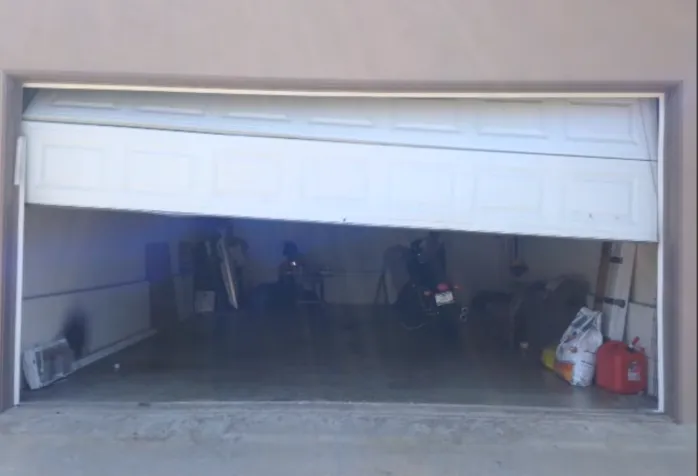
| Gap on one side only, other side seals | Crooked door, cable or track problem, or uneven floor | Do not adjust the door to chase the gap, call for an inspection |
| Small gap along the whole bottom, seal looks flat | Worn, flattened bottom seal | Replace the bottom seal, check the floor for a dip |
| Door will not close only in late afternoon | Low sun blinding the receiving sensor | Shade the sensor, or turn it slightly, then retest |
| Wall button closes it, remote does not | Sensors, or lock button, since holding the wall button overrides sensors | Check sensors and the lock button, not the remote battery first |
| Door is crooked, jerky, or you heard a loud bang | Broken spring, frayed cable, or roller off track | Stop using it, keep clear, call a technician |
Garage Door Won’t Close All the Way: Safety Sensors First
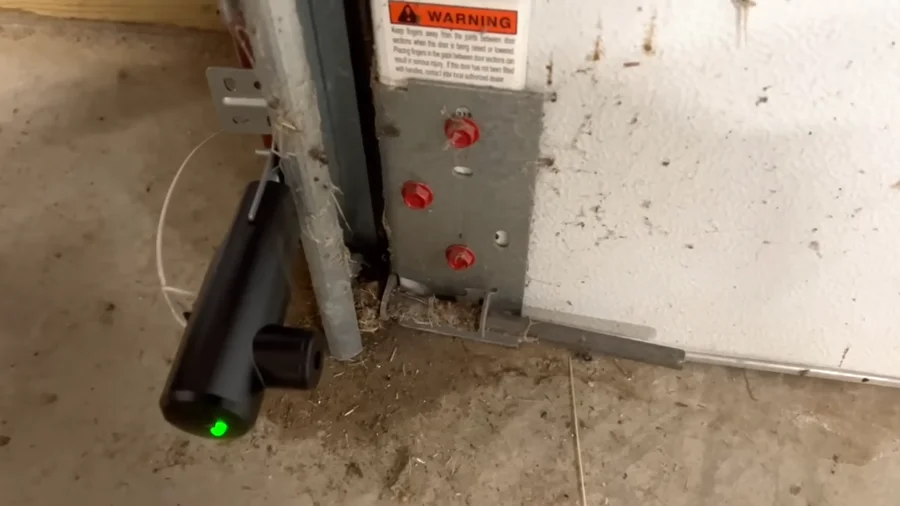
A garage door won’t close all the way is, most of the time, a safety-sensor problem, and that is good news, because sensors are the easiest cause to check. Every opener sold in the United States since 1993 must have a safety reversing system, and on most homes that system is a pair of small photo-eye sensors, one on each side of the door, a few inches above the floor.
One sensor sends an invisible beam, the other receives it, and if anything breaks that beam, or if the opener cannot confirm the sensors are connected and aligned, it refuses to close, so the door cannot come down on a child, a pet, or a car.
For industry safety guidance on these reversing systems, see the Door & Access Systems Manufacturers Association (DASMA).
A garage door won’t close all the way from a sensor fault is checked in a fixed order, and skipping a step is how a clean lens gets blamed for a broken wire. Wipe both lenses with a soft, dry cloth, removing dust, spider webs, and dried water spots, and do not spray cleaner straight onto the sensor.
Read both lights: on most LiftMaster and Chamberlain openers the sender shows a steady amber light and the receiver shows a steady green light when it sees the beam, and a light that is off, dim, or flickering points to alignment or a wire problem. Realign the receiver by loosening its wing nut or bracket screw, tilting it slowly until its light glows steady, then tightening it without moving it, so the two eyes point straight at each other at the same height.
A garage door won’t close all the way can also be a sensor wire problem, even when both lenses look clean, and wires deserve the same attention as lenses. Follow the thin sensor wires back toward the opener and look for staples driven through them, chew marks, kinks, or corroded splices, because a nicked or corroded wire causes the same fault as a dirty lens.
Clear the path and the floor as well, moving a trash can, a coiled hose, a stored bike, or leaves that break the beam, and check at different times of day, because low sun can blind a receiver. If you clean and align both eyes and the receiver light still will not hold steady, the wiring or the sensor itself has failed, and that is the point where a do-it-yourself fix usually ends and a service call begins.
Garage Door Won’t Close All the Way: Sun Glare in Florida
A garage door won’t close all the way in Florida has one cause that northern guides barely mention, and it is sun glare, because many St. Cloud garages face west and late afternoon sun can blind a sensor. Strong sun shining straight into the receiving sensor can drown out its beam, so the door refuses to close or reverses, often at the same time each afternoon, and then works perfectly again in the morning. That pattern is the giveaway, because a broken sensor does not heal overnight, while a sun-blinded sensor does, and the fix is usually small: shade the receiving sensor, or turn it slightly, then retest at the same time of day.
A garage door won’t close all the way from sun glare must never be fixed by moving the sensors higher, taping them together, or disabling them, because the beam height exists for a reason. Industry guidance puts the beam no higher than six inches above the floor, and within six inches of the door’s path, so a small child cannot crawl under the beam, and raising the sensors to escape the sun would break that protection.
A small shade over the receiver, or a slight turn that keeps both eyes facing each other at the same height, is the safe fix, and if the door still will not close after shading, the cause is not sun alone, and the next sections apply.
Garage Door Won’t Close All the Way: Lock Button and Wall Console
A garage door won’t close all the way can be a lock button, not a fault at all, and it is worth checking before you touch any setting. Most wall consoles have a lock or vacation button that disables remotes and sometimes the close function, and a blinking wall-button light often signals that lockout. Press and hold the lock button for a few seconds to toggle it off, following your opener manual, and then try the remote again, because a door that closes from the wall button but not from the remote is almost always a sensor or lock problem, not a remote battery problem.
A garage door won’t close all the way from a lock button is also a clue about the wall button itself, because holding the wall button down works differently from pressing a remote. On many openers, pressing and holding the hardwired wall button until the door is fully down overrides the safety sensors for that one cycle, while a remote cannot do that, so when the wall button works and the remote does not, the sensors are almost always the cause.
That override is a temporary way to get a door shut tonight, never a fix, and it must be used with the doorway clear and watched the whole time, because it removes the safety stop for that cycle, and the sensors must be repaired as soon as possible.
Garage Door Won’t Close All the Way: Travel Limits and Force
A garage door won’t close all the way from a travel limit is a setting problem, and it comes in two opposite forms that look similar from the floor. If the down-travel limit is set too short, the opener thinks it has reached the floor before it has, and the door stops with a gap, every time, at the same height.
If the down-travel limit is set too far, the door reaches the floor, the opener keeps pushing, decides it has hit an obstruction, and reverses, so the door touches the floor and bounces back up. Both are adjusted with small dials, screws, or a digital menu on the opener head, following your model’s manual, and both must be retested after any change.
A garage door won’t close all the way must never be fixed by raising the close-force setting to push past a binding door, because force is part of the safety system, not a power control. A force setting dialed too low reads the normal resistance of the door near the floor as an obstacle and reverses, while a force setting dialed too high can fail to reverse on a real obstruction, which is exactly what the safety system exists to prevent.
The safe order is to fix the cause first — clear the track, check the rollers, check the seal and the floor — then reset the travel per your manual, in tiny steps, and finish with the reverse test, because the door must reverse on a flat board about one and a half inches thick laid on the floor.
A garage door won’t close all the way after a travel change that will not hold is also a warning, because limits that keep drifting point to a deeper problem. A door that binds in its track, a roller that drags, a cable that slips, or a spring that is losing balance can all make a travel setting look wrong, and adjusting the limit again will not fix any of them. If you adjust travel per the manual, retest the reverse, and the door still stops short, bounces back, or stops at a different height each time, stop adjusting and call, because the cause is mechanical, not a setting, and further adjustment only hides it.
Garage Door Won’t Close All the Way: Tracks, Rollers, and Binding
A garage door won’t close all the way from a binding track or a worn roller is a mechanical problem, and it shows up as a door that sticks, jerks, scrapes, or stops at a different height each time. A bent track, a track shifted away from the frame, a roller with a flat spot or a cracked nylon sleeve, or debris packed into the lower track can all create a friction point near the floor, where the door needs the most travel.
Check the bottom few feet of track on both sides first, looking for dents, warping, visible bends, and debris, and watch the door as it moves, because a door that shakes, tilts, or makes a grinding sound is telling you to stop using it.
A garage door won’t close all the way from binding must never be muscled through, because forcing an opener against a binding door damages the opener and the door, and a roller that has left its track is a stop-now problem. A door off its track needs a technician, a cable that is frayed or off its drum needs a technician, and a door that is crooked or hangs unevenly needs a technician, because those parts hold the door under spring tension.
The safe homeowner checks are visual only: look at the tracks, look at the rollers, clear debris from the track area, and do not loosen track bolts on a door that is crooked or off its track, because the track and the door are holding each other in place.
Garage Door Won’t Close All the Way: Bottom Seal and Uneven Floor
A garage door won’t close all the way can be a bottom seal problem, and it is the most visible gap of all, because you can see daylight under the door. A bottom seal, also called an astragal, is a flexible rubber or vinyl strip in a channel at the bottom of the door, and it should compress slightly against the floor to seal out rain, heat, bugs, and dust. Over time that seal flattens, cracks, or loses flexibility, and a seal that was full and flexible a year ago can be totally flat now, leaving a gap even when the door itself closes fully and the opener settings are correct.
A garage door won’t close all the way from a worn seal is fixed by replacing the seal, not by adjusting the door to chase the gap, and that distinction matters. Slide a new, pliable seal into the retaining channel at the bottom of the door panel, following your door’s seal type, and check that it compresses evenly across the full width, because a new seal that is full and flexible enough will cover a small gap that an old, flat seal cannot. If the seal is new and the gap remains, the problem is not the seal, and adjusting the opener to push harder will not fix it, because the opener reacts to the highest point of contact with the floor, not to the lowest.
A garage door won’t close all the way from an uneven floor is a different problem again, and it is common on concrete slabs that have settled, because a slab can dip slightly in one section while the rest stays level. A door that leaves a gap on one side only, or a gap about eighteen inches long in one section, while the rest of the door seals, is very likely a floor dip, not a door fault, and adjusting the door to close that gap can make the door malfunction, because the door cannot bend to follow the floor.
The honest fixes are a new, fuller seal, a soft filler such as foam backer rod tucked into the seal channel to keep it full in the dipped section, or a floor repair by a concrete specialist, and a large gap is worth a floor assessment, while a slight gap is often best lived with after a seal change.
A garage door won’t close all the way in St. Cloud also has a Florida floor problem, because rain, wash water, and damp air keep a garage floor wet, and a wet slab under a door can swell a seal, trap debris, and hide a dip. Keep the threshold clear of leaves, dirt, and bins that block the seal, rinse the slab under the door after heavy rain if debris has washed in, and check the seal after storm season, because a seal that has been soaked and dried repeatedly ages faster than a dry seal. If the gap appears after a storm and the door worked before it, check for debris under the door and in the lower tracks first, before you blame the opener or the seal.
Garage Door Won’t Close All the Way: Spring, Cable, and Balance Stop Line
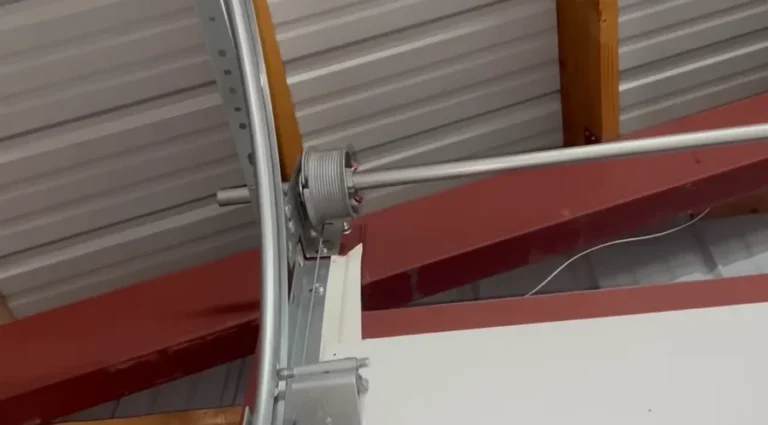
A garage door won’t close all the way from a broken spring or cable stops a door in a different way from electronics, and it is the stop line for every homeowner check in this guide. A snapped torsion spring leaves the door heavy and out of balance, so it may close crooked, bind, or refuse to seat against the floor, while a broken lift cable lets one side of the door drop, so it hangs at an angle and jams in the track. If your door looks crooked, hangs unevenly, will not move by hand, or you heard a loud bang from the garage, stop pressing the button, because forcing an opener against a broken spring or a jammed door damages the opener and the door, and the parts are under heavy tension.
A garage door won’t close all the way from balance is checked only by observation, never by adjustment, because springs, cables, drums, and bottom brackets hold the full weight of the door. A balanced door lifts easily by hand and stays put halfway when the opener is disconnected, while a door that feels heavy, drops, or rises on its own is out of balance, and that balance is a technician job, not a setting job. Do not loosen, adjust, wind, or re-spool any spring, cable, drum, or bottom bracket yourself, and do not try to re-spool a cable that has jumped its drum, because a cable under tension can slip and cause injury, and a new cable alone will not fix a worn drum or a binding track that caused the failure.
Garage Door Won’t Close All the Way: What to Do Tonight
A garage door won’t close all the way at night, when you need to leave, is a security problem first and a repair problem second, and there is a safe order for getting it shut. First, clear the path, clean and align the sensors, and check the lock button, because those three checks solve most cases in minutes. If the door still will not close, press and hold the hardwired wall button without letting go until the door is fully down, watching the doorway the whole time and keeping everyone clear, because that override bypasses the photo-eye check for that one cycle only, and a remote will not do it.
A garage door won’t close all the way that still will not close after the wall-button override needs a manual close, and that close has its own safety order. Pull the emergency release cord to disconnect the opener, lower the door by hand only if it moves freely and evenly, and lock it afterward with the manual slide lock if your door has one, because a door you cannot lock should never be left open overnight.
If the door is crooked, heavy, jammed, or off its track, do not pull the release and do not try to lift it by hand, because one corner is now unsupported and the door can rack sideways or drop, and in that case the safe choice is to keep the area clear and call a technician.
Garage Door Won’t Close All the Way: When to Call a Technician
A garage door won’t close all the way needs a technician when a sensor light stays dark after cleaning, realigning, and checking the wiring, which points to a dead sensor or a control board, and when travel and force adjustments will not hold, which points to a mechanical cause. It also needs a technician when the door is crooked, when you heard a bang, when a cable is frayed or off its drum, when a roller is out of its track, or when the door binds, shakes, or stops at a different height each time.
A technician visit covers the cause, not just the symptom, because a sensor replaced without checking its wires, or a cable replaced without checking its drum, will fail again in the same place.
A garage door won’t close all the way is also a technician job when the cause is the floor, the track, or the door itself, because those fixes are outside a homeowner’s safe scope. A track that needs realignment, a panel that is bent, a door that is racked so its top and bottom gaps differ, or a slab that has settled enough to leave a large gap all need a professional assessment, and a written scope, before work begins.
Ask for that scope in writing, with parts, labour, and what was inspected, and confirm the final price before work begins, because a quote that ignores a worn drum, a bent track, or a settled floor can grow halfway through the job.
Garage Door Won’t Close All the Way: What to Tell a Technician When You Call
Use these short lines, filling in the brackets, for a garage door won’t close all the way problem:
- “My garage door won’t close all the way problem is in St. Cloud.”
- “The door does not move, moves a little and goes back up, stops a few inches above the floor, or touches the floor and bounces back.”
- “The sensor lights are steady, flickering, off, or flashing about 10 times, and the door will or will not close from the wall button.”
- “The gap is along the whole bottom, on one side only, or about [number] inches long in one section, and the bottom seal looks new, flat, or cracked.”
- “The door is straight, crooked, jerky, or heavy, and I did or did not hear a loud bang.”
- “Can you confirm the price before work begins?”
Add your neighbourhood — Downtown St. Cloud, Stevens Plantation, Canoe Creek, Harmony, Narcoossee Road, Kissimmee, Lake Nona, Poinciana, or Holopaw — so the visit can be planned, and say if the door is also out of level, binding, or not closing fully at the same time each afternoon, because that changes the diagnosis from a setting to a sensor, a track, or a floor problem. Do not guess at a spring or cable fix if you are unsure, because a photo of the gap and the sensor lights, taken safely without loosening any bracket, is more useful than a confident but wrong diagnosis.
Conclusion
A garage door won’t close all the way in St. Cloud is usually a small cause with a clear symptom, and the symptom is where the fix starts. Clean and align the sensors, check the lock button, clear the path, and check the bottom seal and the floor before you touch any setting, and if you do adjust travel, do it per your manual, in tiny steps, and retest the reverse on a flat board.
Never tape sensors together, never raise force to push past binding, and never touch springs, cables, drums, or bottom brackets to fix a gap. If the door goes fully down and seals, you have found the problem, and if it stays short, crooked, or bouncing back after those checks, you have found the next problem, which is a technician’s inspection, with the price confirmed before work begins.
Serving all of St. Cloud — Downtown St. Cloud and the Lakefront, Stevens Plantation, Canoe Creek, Harmony, and the Narcoossee Road corridor, plus nearby Kissimmee, Buenaventura Lakes, Lake Nona, Hunters Creek, Poinciana, and Holopaw.
Frequently Asked Questions
Why does my garage door won’t close all the way, but the remote still works?
A garage door won’t close all the way with a working remote is usually a sensor or lock problem, not a remote problem, because the opener refuses to finish closing. Clean both lenses, check that both lights glow steady, and check the lock button on the wall console.
Can sunlight stop a garage door won’t close all the way problem in Florida?
Yes, strong sun shining straight into the receiving sensor can drown out its beam, so a garage door won’t close all the way, or reverses, often at the same time each afternoon. Shade the sensor, or turn it slightly, provided both eyes still face each other at the same height.
What do the lights on garage door sensors mean when a garage door won’t close all the way?
On most openers, each sensor has a small light, and when both glow steady, the sensors see each other and the door can close. If the receiving light is off, dim, or flickering, the sensors are out of line, dirty, or have a wiring problem, and 10 opener flashes also mean sensors.
How do I clean garage door safety sensors for a garage door won’t close all the way?
Wipe each lens gently with a soft, dry cloth, removing dust, spider webs, and dried water spots, and do not spray cleaner straight onto the sensor. After cleaning, check that both lights glow steady, then test the door, and check the wires for staples, chew marks, or corroded splices.
Is it safe to tape the sensors together when a garage door won’t close all the way?
No, taping or bypassing the sensors turns off the main safety feature that stops the door from closing on a person or pet, and a garage door won’t close all the way must never be fixed that way. If you need to leave, hold the wall button down, watching the doorway, then get the sensors fixed.
Why does my garage door won’t close all the way stop a few inches above the floor?
Usually the close travel limit is set too short, or the force is so low that the opener mistakes normal resistance for an obstacle, and a garage door won’t close all the way at a fixed height points to one of those settings. Check the tracks first, then adjust travel per your manual, in tiny steps.
Why does my garage door won’t close all the way touch the floor and then bounce back?
Because the close travel limit is set too far, so the door reaches the floor, the opener keeps pushing, and it reads the stop as an obstruction, or because a swollen seal, a bent panel, or debris near the floor creates drag. Clear the bottom track, check the seal, then reset travel per your manual.
Can a worn bottom seal cause a garage door won’t close all the way gap?
Yes, a flattened or cracked bottom seal leaves a gap even when the door itself closes fully, so a garage door won’t close all the way can look like an opener problem when it is really a seal problem. Replace the seal with a new, pliable one, and check that it compresses evenly across the full width.
Can an uneven floor cause a garage door won’t close all the way on one side?
Yes, a concrete slab that has settled can dip in one section, leaving a gap on one side only, or a gap about eighteen inches long in one section, while the rest of the door seals. A garage door won’t close all the way from a floor dip cannot be fixed by adjusting the door, because the door cannot bend to follow the floor.
When should I call a technician for a garage door won’t close all the way?
Call when a sensor light stays dark after cleaning, realigning, and checking the wiring, when travel and force adjustments will not hold, or when the door is crooked, jerky, heavy, or off its track. A garage door won’t close all the way from a broken spring or frayed cable is a technician job.
—