
Garage Door Opener Humming? St. Cloud Fix Guide
Garage door opener humming but not moving the door? An opener that hums but doesn’t move the door is almost always fighting a broken spring — the motor is overloaded, not dead. Click-then-grinding means stripped nylon gears. One click then silence points to the logic board, wiring, or a lockout. Match your symptom below before you spend a dollar.
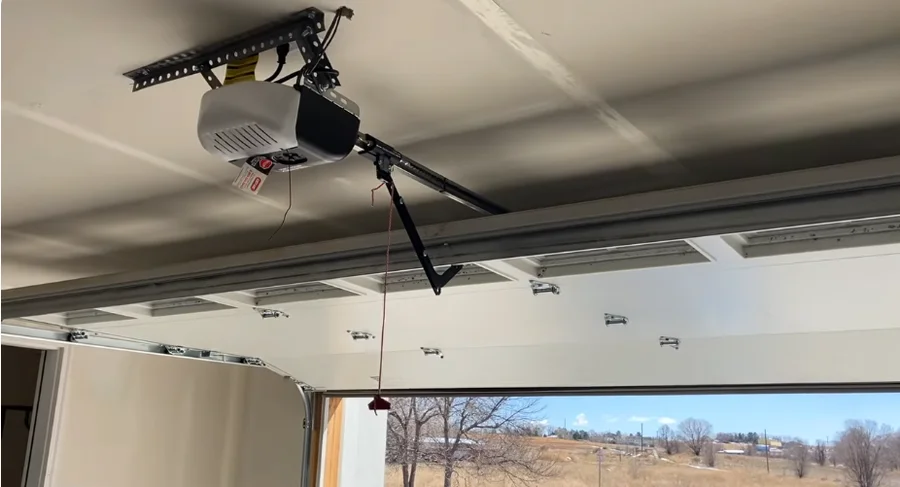
Garage Door Opener Humming? Match Your Symptom
Hum + no movement = broken spring (most common)
The motor is running against a door it can’t lift. Look at the torsion spring above the door for a visible coil gap. Stop running the opener immediately — every attempt strips the gears further. This needs spring repair, not a new opener.
Click + whirring/grinding = stripped gears
Inside most chain-drive openers, a nylon gear drives the chain sprocket. It’s designed as a sacrificial part — and it strips when the opener fights too much weight (often after a spring weakened). Tell-tale clue: white plastic shavings on top of the opener housing. HomeAdvisor lists opener repair parts at $100–$500 nationally, and says openers last 10 to 15 years, so on an older opener replacing the whole unit can make more sense.
Single click + silence = logic board, wiring, or lockout
If the garage door opener humming started after a period of normal operation, check these in order: (1) Is the wall console’s lock/vacation button engaged? It’s bumped accidentally all the time. (2) Is the opener getting power — breaker, GFCI outlet, plug? (3) Any recent lightning? Central Florida power surges fry logic boards regularly. A dead board on an old opener usually means replacement.
Motor runs but the trolley doesn’t move = drive failure
The motor spins, the chain/belt doesn’t. That’s the gear/sprocket assembly or a snapped chain. Same cost math as stripped gears above.
Reading Your Opener’s Blinking Lights
LiftMaster and Chamberlain openers communicate through the learn-button LED — handy when garage door opener humming has you stumped. Count the flashes:
| Flashes | Meaning | Your move |
|---|---|---|
| 1 | Sensor wires shorted or reversed | Check sensor wiring |
| 2 | Sensor wires shorted | Inspect for pinched/damaged wire |
| 3 | Door control wires issue | Check wall console wiring |
| 4 | Sensors misaligned | Realign sensors |
| 5 | No movement / motor fault | Check for broken spring first, then motor |
Safe Homeowner Checks vs. Call a Pro
- Safe for you: checking breakers and plugs, testing the wall console lock button, wiping and realigning sensors, replacing remote batteries, reprogramming a remote after a surge.
- Call a pro: anything involving the spring system, opening the opener housing to replace gears or boards (mains voltage inside), or a door that feels heavy or crooked.
⚠️ Florida Lightning Kills Openers
Smart openers are computers — and Central Florida lightning fries computer boards. If a garage door opener humming issue started right after a storm, suspect the board. Put your opener on a surge protector recommended by the manufacturer.
Repair or Replace the Opener? The 50% Rule
| Option | National cost (source) |
|---|---|
| Opener repair parts | $100–$500 (HomeAdvisor) |
| New opener installed | $218–$540, average $379 (HomeAdvisor) |
When a garage door opener humming fault needs parts, use the 50% rule: if the repair is more than half the cost of new and the opener is 10–15+ years old, replace it. A new unit buys you a quieter drive, battery backup, smartphone control, and a fresh warranty — things a repaired 14-year-old opener will never have. Also note: dry rollers or a weak spring can make a healthy opener look like it is failing. Always rule out the door before condemning the opener.
Opener Acting Up? Get a Real Diagnosis
Call (407) 674-3803 and we’ll connect you with an independent technician who can check whether it’s the spring, the gears or the board, and price repair against replacement.
Frequently Asked Questions
Why is my garage door opener humming but not opening?
Almost always a broken spring overloading the motor. Stop running the opener — you’re stripping its gears — and get the spring inspected. The opener itself is usually fine.
What does it mean when my garage door clicks but doesn’t move?
A click followed by grinding usually means stripped nylon drive gears inside the opener. A single click then silence points to the logic board, wiring, or an engaged lock button on the wall console.
How do I read LiftMaster error codes?
Count the flashes on the learn-button LED: 1–2 = sensor wiring, 3 = wall control wiring, 4 = sensor misalignment, 5 = motor/movement fault. Always check for a broken spring before assuming the opener is dead.
Should I repair or replace my old garage door opener?
Use the 50% rule: if the repair costs more than half of a new installed opener and the unit is 10–15+ years old, replace it. New openers add battery backup, quieter operation, and smart features.
Can a power surge damage my garage door opener?
Yes — it’s one of the top reasons a garage door opener humming complaint turns into a replacement. Lightning-induced surges fry logic boards. A surge protector on the opener outlet and a whole-home surge protector are cheap insurance.
St. Cloud Opener Repair & Replacement
Opener diagnosis across St. Cloud, FL. Call to check availability. Call (407) 674-3803 — we’ll fix what’s fixable and tell you straight when replacement is smarter.